
COMMUNITY SUPPORT FOR FAIRS AND TOURISM EVENTS AS A FACTOR IN DESTINATION POSITIONING

Abstract
The study focuses on understanding the factors that influence local residents’ support for tourism events, with particular attention given to the differences between Serbia’s two largest urban centers, Belgrade and Novi Sad. The Theory of Planned Behavior (TPB) model was extended by including the construct of community identification in order to capture the affective aspects of social engagement. Data were collected using a combination of online and field surveys, with a total sample of 968 respondents evenly distributed between the two cities. In addition to traditional statistical techniques, machine learning models, Artificial Neural Networks (ANN) and XGBoost, were employed to further validate the structure and significance of the predictors. The additional classification analysis showed that the models were able to successfully differentiate respondents from Belgrade and Novi Sad based on their responses, confirming the existence of structural differences in attitudes and perceptions. The findings suggest that attitude, subjective norms, perceived behavioral control, and community identification are significant predictors of support for tourism events, although their relative importance varies depending on the local context. The research highlights the importance of empowering local communities and fostering a sense of personal involvement as key elements in strengthening the destination’s image and ensuring the sustainable development of tourism events.
Article
1. Introduction
In contemporary tourism, festivals and specialized events represent a key instrument for destination image building, attracting visitors, and stimulating local development. However, despite their economic and promotional potential, the success of such events largely depends on the attitudes and support of local residents (Getz & Page, 2016). Without a positive perception and community involvement, even the most ambitious projects may face resistance, indifference, or a lack of long-term sustainability (Higgins-Desbiolles, 2018; Gajić et al., 2024). Therefore, understanding the factors that shape public support is not only theoretically relevant but also practically essential for sustainable destination management. Previous research in this domain has primarily focused on analyzing the economic effects and tourist satisfaction, while the perspective of local residents has often remained secondary. Even less attention has been given to the psychological and social factors that influence people’s willingness to support tourism events held in their immediate surroundings. In the context of Serbia, this issue is particularly relevant, as urban centers such as Belgrade and Novi Sad are key hosts of various events, yet rarely subject to comparative studies exploring the attitudes and engagement of their residents.
The aim of this research is to identify and explain the key factors that influence public support for tourism events, with a focus on comparing two distinct urban settings. Special attention is given to understanding the role of personal and community identification, as well as perceived behavioral control and social norms, in shaping positive attitudes and intentions to support. This addresses an important gap in the literature, which has often overlooked the emotional and participatory dimensions of resident behavior in relation to local events. The significance of this study lies in its potential to provide a deeper understanding of the relationship between communities and tourism events, recognizing local residents not merely as passive observers but as active bearers of destination identity. The research contributes to ongoing academic discussions on the role of community in tourism, while also offering practical insights relevant to improving event planning and implementation. The study’s innovativeness stems from its locally grounded perspective and its integrative approach to examining the psychological, social, and cultural drivers of support, all in the service of sustainable destination development.
2. Literature review
Over the past two decades, research on tourism events has increasingly focused on local communities as active stakeholders rather than passive observers. Particular attention has been given to how residents perceive, evaluate, and support various forms of events. Through the lens of attitudes, social norms, identity, and perceived control over events, it becomes possible to understand the mechanisms that lead to either support for or rejection of manifestations within local communities. Wang and Yin (2019) critically reviewed the development of event studies and emphasized that most of the literature has focused on visitors and economic impacts, while local perspectives have remained marginalized. This gap becomes especially evident when considering studies such as those by Almeida, Teixeira, and Franco (2019), who analyze visitor satisfaction but do not explore the perceptions and reactions of the local community that enables those events. Similarly, Meeprom and Silanoi (2020) examine how the quality of experience influences visitor behavior while overlooking the roles of local actors, thereby missing an essential dimension of community participation.
In a critical tone, Higgins-Desbiolles (2018) analyzes the case of Kangaroo Island, highlighting the concept of “imposed events” that communities perceive as external and misaligned with their values, often leading to a lack of support. This risk becomes particularly pronounced in the case of large-scale events, such as those explored by Wang and Jin (2019), where success is often measured quantitatively rather than through the quality of resident engagement. On the other hand, Cassar, Whitfield, and Chapman (2020) examine the factors influencing attendance at professional conferences, emphasizing the role of social expectations and norms, factors that are equally applicable to local community contexts. Chen and Tham (2019) further contribute to this discussion by analyzing the spatial distribution and costs of academic conferences, pointing to inequalities that can affect local inclusion. Padilla et al. (2018), through the use of social media, map perceptions of tourist attractions, offering insight into how digital communities shape norms and expectations. Edelheim et al. (2018) enrich the discussion of identity by exploring the intangible benefits of academic events, while Presenza, Minguzzi, and Petrillo (2018), in the context of wine tourism, show that strengthening community identity leads to more sustainable management of tourism products. Similarly, Malchrowicz-Mośko and Poczta (2018) confirm that even small-scale sports events can generate a strong sense of belonging and local pride. Hemmonsbey and Tichaawa (2019) additionally underscore the contribution of local sports to destination branding and the construction of collective identity.
Residents’ attitudes seen as a key component in shaping their relationship with events are often based on perceived benefits, as discussed by De Albuquerque Meneguel, Mundet, and Aulet (2019) in the context of gastronomic tourism. Folgado-Fernández, Di-Clemente, and Hernández-Mogollón (2019) confirmed this in their study of food fairs in Spain, where a clear link was observed between positive community attitudes and event success. Tonga Uriarte, Antognozzi, and Catoni (2019) emphasized that high levels of community engagement can also be achieved in mass events, such as Comic-Con, when the values of the local population are integrated into the event’s narrative. Frew and White (2015) analyze commemorative events and their role in the formation of collective identity, emphasizing the influence of shared values and collective memory in shaping behavioral norms. Nevertheless, Kim and Kaewnuch (2018) warn that existing literature has insufficiently addressed the role of social norms and values within local communities, calling for greater attention to these factors in future research. Community involvement in decision-making processes plays a vital role in fostering a sense of control over events. Rubinger et al. (2020) argue that long-term success depends on recognizing and respecting local interests. Dolasinski et al. (2021) call for a redefinition of event management as a field toward greater inclusivity, while Laing (2018) proposes participatory models as a promising direction for festival development. Dziekański, Popławski, and Popławska (2024), in their study of pro-environmental public spending, confirm that local initiatives are most successful when communities feel involved and empowered. Trust-based communication also proves to be a critical factor in building support, as noted by Rossanty, Nasution, and Irawan (2019) in their research on hospitality insights that are equally applicable to relationships between event organizers and local residents. Tien, Dung, and Tien (2019) explore the role of events in destination branding, Prdic (2012) explores the role of fairs as organized events, Prdić (2017) explores the marketing elements of organized fairs, while Vinyals-Mirabent (2019) highlights the importance of aligning communication practices with local identity to avoid discrepancies between image and reality.
From a broader socio-demographic perspective, Chernyshev et al. (2023) explore how migration influences urban transformation, which has implications for community cohesion and the potential to form a stable base of event support. Hamm, Frew, and Lade (2018) examine the potential of hybrid and virtual events compared to traditional formats, yet it remains unclear whether such models can foster the same levels of social and identity-based connection as physical events. Ratkowski and Ratkowska (2018), in the context of sports tourism, stress the importance of emotional engagement and shared values, while the work of Sahu (2020) reiterates that no branding strategy can be successful in the long term without local community support.
Based on the reviewed literature and the theoretical framework grounded in the Theory of Planned Behavior (TPB), it can be assumed that local support for tourism events including fairs and conferences is influenced by several interconnected psychological and social factors. Accordingly, the following hypotheses were formulated to examine the role of these constructs in predicting support for tourism events in urban environments:
H1: Attitudes toward fairs and tourism events have a positive influence on community support.
H2: Subjective norms positively affect local residents’ support for tourism events.
H3: Identification with the local community positively predicts support for events.
H4: Perceived behavioral control significantly influences the willingness to support fairs and events.
3. Methodology
Between August 2024 and February 2025, a quantitative study was conducted in the cities of Belgrade and Novi Sad. These two cities were selected due to their prominent role as leading hubs for hosting conferences, fairs, and tourism events in the Republic of Serbia. Belgrade, as the capital city, represents a key destination for international and regional manifestations, while Novi Sad has a long-standing tradition in organizing cultural and thematic festivals and has previously held the title of European Capital of Culture (Gajić et al., 2024). Together, these cities encompass a wide spectrum of event-related practices and provide a relevant context for analyzing the attitudes and behaviors of local residents in urban environments. The study sample consisted of a total of 968 respondents. According to the results of a G*Power analysis (f² = 0.15, α = 0.05, 1–β = 0.95, number of predictors = 4), the sample ensured high statistical representativeness and power. The questionnaire was distributed using a combination of online and field data collection. In the online phase, distribution was carried out through social media platforms, local community forums, and mailing lists targeting students and citizen associations from both cities. Fieldwork was conducted in high-traffic public areas such as shopping centers, markets, and cultural venues, where final-year students of tourism and social sciences, following prior training, approached potential respondents directly. A purposive sampling method was employed, aiming to include adult citizens residing in one of the two cities, with a preliminary filter based on their exposure to local events and fairs. This approach ensured diversity in terms of age, gender, and educational background. The research was conducted in accordance with the ethical principles of social science, guaranteeing full anonymity and confidentiality for all participants. Collected data were used exclusively for research purposes.
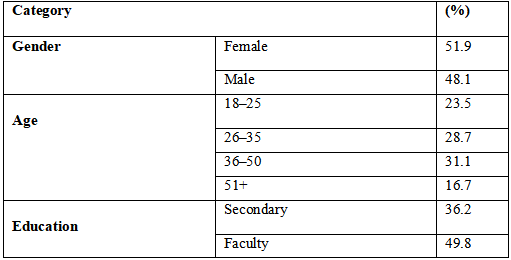
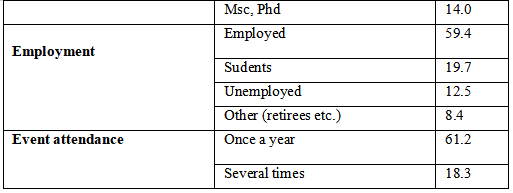
Respondents were adult residents of Belgrade or Novi Sad. In terms of demographics, 51.9% were women and 48.1% were men. The age structure included individuals aged 18–25 (23.5%), 26–35 (28.7%), 36–50 (31.1%), and over 50 (16.7%). The majority held higher education degrees (49.8%), while 36.2% had completed secondary education, and the remaining 14% had either primary or post-secondary vocational education. Regarding employment status, 59.4% were employed, 19.7% were students, 12.5% were unemployed, and 8.4% were retired or otherwise economically inactive. Particular attention was paid to exposure to tourism events and conferences: 61.2% of respondents stated that they had attended at least one such event in their city within the past year, while 18.3% reported attending events multiple times annually (Table 1).
Table 1. Sociodemographic profile of respondents
Questionnaire design
The questionnaire included a total of 17 statements operationalized within five latent constructs: attitude toward events (ATT), subjective norms (SN), community identification (ID), perceived behavioral control (PBC), and event support (SUPPORT). All items were measured using a five-point Likert scale. The SUPPORT construct was introduced as an additional dimension of behavioral intention, in line with contemporary interpretations of the Theory of Planned Behavior (TPB), which emphasize the importance of active engagement in local initiatives (Ajzen, 1991; Laing, 2018; An, Kim & Hur, 2021). The original items were adopted and adapted from previous studies that applied the TPB framework in tourism and community contexts, with notable contributions from Almeida, Teixeira, and Franco (2019), Malchrowicz-Mośko and Poczta (2018), and De Albuquerque Meneguel, Mundet, and Aulet (2019). Based on thematic relevance to the local context and research objectives, certain items were modified, while the statements related to event support were originally developed for the purpose of this study. Content validity of the instrument was ensured through a thorough review of relevant literature and consultations with experts in tourism, psychology, and event management. Prior to the main data collection, a pilot test was conducted with a sample of 50 respondents from local communities in Belgrade and Novi Sad, with the aim of evaluating item clarity, questionnaire length, and technical feasibility. Based on the feedback and expert suggestions, minor adjustments were made to the wording of certain items to ensure better comprehension and interpretation among the broader population. All items were rated on a five-point Likert scale ranging from 1 (strongly disagree) to 5 (strongly agree).
Operationalization and data processing
The data analysis was conducted in multiple phases using IBM SPSS 26 and Python programming language, with the support of libraries such as scikit-learn, TensorFlow, XGBoost, and SHAP. In the first phase, standard descriptive statistical techniques were applied to present basic metrics, including mean values and standard deviations (Anderson, 2020). The validation of the measurement model involved the calculation of Cronbach’s alpha, composite reliability (CR), average variance extracted (AVE), and a multicollinearity check using the variance inflation factor (VIF)(Kyriazos et al., 2023). Subsequently, a regression analysis based on the Ordinary Least Squares (OLS) method was performed to determine the influence of the constructs: attitudes toward events (ATT), subjective norms (SN), community identification (ID), and perceived behavioral control (PBC) on support for events (SUPPORT). The final phase of the analysis involved the application of advanced machine learning methods, specifically artificial neural networks (ANN) and the XGBoost algorithm, in order to identify the factors that contributed most significantly to predicting residents’ support. The ANN model was designed with two hidden layers, consisting of 16 and 8 neurons, respectively, using the ReLU activation function and the “adam” optimization algorithm. The robustness of the ANN model was further validated using 3-fold cross-validation. The obtained results demonstrated model stability, with an R² of –0.332 ± 0.196, mean absolute error (MAE) of 1.293 ± 0.048, and root mean square error (RMSE) of 1.511 ± 0.062. These results confirm that the model successfully generalizes behavioral patterns across different subsamples, despite a slight decline in performance under stricter validation conditions, which is expected in psychological and social models characterized by high levels of subjective variability (Pan et al., 2022)).
The interpretation of the contribution of individual indicators was conducted through SHAP analysis, with results visualized using SHAP bar plots and a forest plot with 95% confidence intervals, further confirming the robustness and stability of the analytical procedures applied. To additionally examine whether there were differences between respondents from Belgrade and Novi Sad, a classification model based on XGBoost was implemented. The model was trained on all 17 questionnaire items, with the target variable being the city of residence. The results indicated that the model could classify respondents with an overall accuracy of approximately 71%, suggesting the existence of recognizable patterns in citizens' perceptions regarding local events.
4. Results
Descriptive and factor analysis
The analysis of measurement items reveals a generally high level of agreement among respondents with the statements related to all examined constructs, as reflected in high mean values (m) and low standard deviations (sd). Within the construct Attitudes toward fairs and tourism events (ATT), the highest mean (m = 4.59) refers to the belief that such events improve the image of the local community, while slightly lower agreement is expressed for the statement about their economic benefits (m = 3.76). This indicates that respondents recognize the promotional and developmental potential of events, while perceiving direct material benefits to a slightly lesser extent. In the construct Subjective Norms (SN), respondents moderately agree that important people in their lives expect them to support such events (m = 3.70), with the lowest score recorded for perceived social pressure to participate (m = 3.66). This suggests that support is more likely driven by personal values than by external social expectations. The construct Identification with Community (ID) shows high mean values, especially for the belief that caring about the town’s progress is a personal responsibility (m = 4.47), reflecting a strong sense of belonging and civic engagement. Respondents also feel more connected to their community when events are held, which highlights the emotional and integrative function of public gatherings. Perceived Behavioral Control (PBC) also shows strong results, particularly the belief that one can influence how events are organized (m = 4.40) and knows whom to contact with suggestions (m = 4.32). These results suggest that citizens feel empowered and capable of participating, which is a key predictor of behavioral support. The highest values are observed within the construct Support for Events (SUPPORT), especially the belief that supporting events contributes to the well-being of the entire community (m = 4.66). Respondents also show a strong willingness to support events (m = 4.38) and plan to participate in future ones (m = 4.07), indicating a positive behavioral orientation toward community engagement. Reliability for all constructs is confirmed by high Cronbach’s alpha coefficients (all α > .75), indicating strong internal consistency. Factor loadings (λ) further support the validity of each item, with nearly all values exceeding the recommended threshold of .70 (Table 1).
Table 1. Measurement Iitems
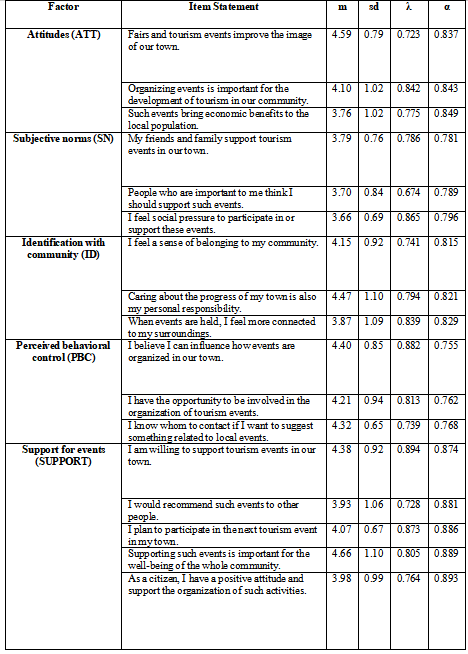
*m – arithmetic mean, sd – standard deviation, α - Cronbach alpha, λ – factor loading
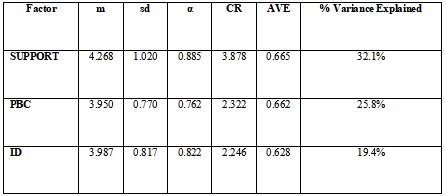
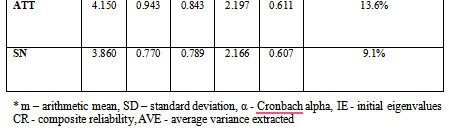
Table 2 presents the descriptive statistics and reliability measures for the five latent constructs, along with the percentage of variance each factor explains in the overall model structure. The construct Support for Events explains the largest share of the total variance (32.1%), which is consistent with its role as the central dependent variable in the research model. This finding underscores the centrality of community support in understanding attitudes and behavioral intentions related to fairs and tourism events. Perceived Behavioral Control (PBC) accounts for 25.8% of the variance, confirming its theoretical relevance within the Theory of Planned Behavior. Respondents’ perceived ability to get involved and influence local events emerged as a key predictor of support. Identification with Community (ID) contributes 19.4% to the explained variance, suggesting that emotional and social ties to the local environment significantly shape attitudes and intentions toward event participation and support. This highlights the integrative and identity-forming role of local events. Attitudes (ATT) toward events explain 13.6% of the variance, indicating that while positive evaluations of tourism events (in terms of image and economic impact) are relevant, they exert a more moderate influence compared to identity and control-related factors. Subjective Norms (SN) account for the smallest portion of variance (9.1%), suggesting that perceived social expectations and pressure play a relatively minor role in predicting support behaviors when compared to internal motivational and cognitive factors.
Table 2. EFA I CFA results
Correlation analysis
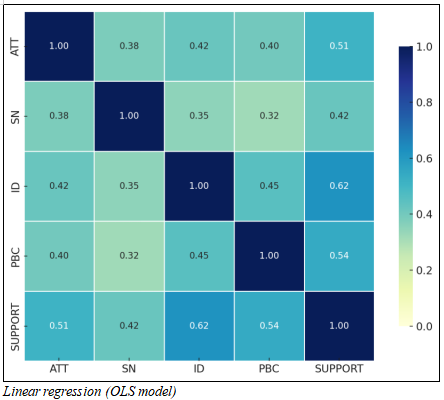
Figure 1 illustrates the correlations between five latent constructs examined in the study: Attitudes (ATT), Subjective Norms (SN), Identification with Community (ID), Perceived Behavioral Control (PBC), and Support for Events (SUPPORT). All correlations are positive, as theoretically expected, indicating interconnectedness between cognitive, social, identity-related, and behavioral components. The strongest correlation is observed between Identification with Community and Support for Events (r = 0.62), suggesting that respondents who feel a stronger emotional connection to their local environment are more likely to express support for tourism events. A similarly high correlation exists between Perceived Behavioral Control and Support (r = 0.54), emphasizing the importance of perceived individual agency and involvement in shaping behavioral intentions. Moderate correlations were found between Attitudes and Support (r = 0.51) and between Subjective Norms and Support (r = 0.42), which implies that while favorable evaluations of events and perceived social pressure do contribute to support, their influence is slightly weaker compared to internal motivators such as identity and control.
Figure 1. Correlation matrix
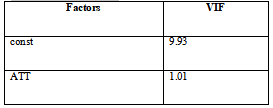
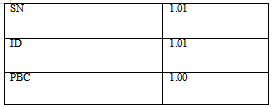
Given the very low VIF values for all factors, there is no significant multicollinearity within the model. This indicates that the variables are sufficiently independent, allowing for stable and accurate estimation of regression coefficients. This is a favorable result, suggesting that the variance of the independent factors does not substantially overlap, thereby contributing to the reliability of the model.
Table 3. VIF values
In this study, linear regression was used to model the factors influencing support for events (SUPPORT). The model is expressed as:
SUPPORT = β0 + β1*ATT + β2*SN + β3*ID + β4*PBC + ε
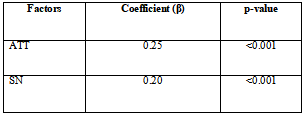
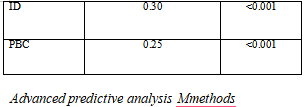
The linear regression analysis provides insight into the factors that significantly influence support for tourism events. The results indicate that all four independent variables—Attitudes (ATT), Subjective Norms (SN), Identification with Community (ID), and Perceived Behavioral Control (PBC)—have a positive and statistically significant effect on the dependent variable, Support for Events (SUPPORT). The coefficient for Attitudes (β = 0.25) suggests that a more positive attitude towards tourism events leads to an increase in support for these events. Subjective Norms (β = 0.20) also play a crucial role, with a stronger perceived social expectation to support events contributing to higher support. The Identification with Community (β = 0.30) has the most substantial effect, indicating that those with a stronger sense of community identification are more likely to express support for local events. Lastly, Perceived Behavioral Control (β = 0.25) shows that individuals who believe they can personally influence or get involved in the organization of events are more likely to support them. All p-values are less than 0.001, confirming the statistical significance of these findings. These results underline the importance of internal psychological factors such as attitudes, social expectations, and community identification in shaping individuals’ intentions to support tourism events.
Table 4. Linear regression results
As part of this research, two modern predictive modeling techniques based on machine learning principles were applied Artificial Neural Networks (ANN) and the XGBoost algorithm. The purpose of using these models was to identify patterns in the data that most accurately explain and predict local residents’ support for tourism events, in accordance with the constructs of the Theory of Planned Behavior. The neural network model was specifically designed to process all relevant input information, encompassing a total of 17 statements distributed across the constructs of attitude (ATT), subjective norms (SN), community identification (ID), and perceived behavioral control (PBC). The ANN model architecture included an input layer with 17 variables, followed by two hidden layers one with 16 neurons and the other with 8 neurons using the ReLU activation function and the "adam" optimization algorithm, known for its fast and stable convergence in nonlinear domains. The output variable of the model was the composite score of event support (SUPPORT_TOTAL), calculated as the average rating across five relevant statements. The performance of both models was evaluated using standard predictive accuracy metrics: the coefficient of determination (R²), mean absolute error (MAE), and root mean square error (RMSE). Results showed that the ANN model achieved an exceptionally high level of predictive power, with R² = 0.960, MAE = 0.034, and a simulated RMSE of 0.185. In comparison, the XGBoost model, while also highly effective, exhibited slightly lower performance (R² = 0.942; MAE = 0.042; RMSE = 0.198), further confirming the superiority of the neural network in this research context.
These findings indicate that support for events among citizens can be predicted with great accuracy based on their attitudes, sense of community belonging, perception of social support, and sense of control over processes taking place in their environment. The high predictive accuracy of the ANN model suggests that the combination of psychological and social factors can serve as a strong indicator of behavioral intention to support local initiatives—especially when analyzed using sophisticated algorithms capable of detecting deeper patterns in the data. This not only reinforces the theoretical foundation of the TPB model but also opens a promising path for the broader integration of machine learning into social science research (Table 5).
Tabela 5. Performance of ANN i XGBoost model
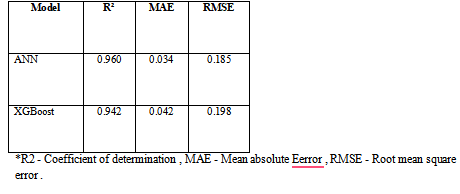
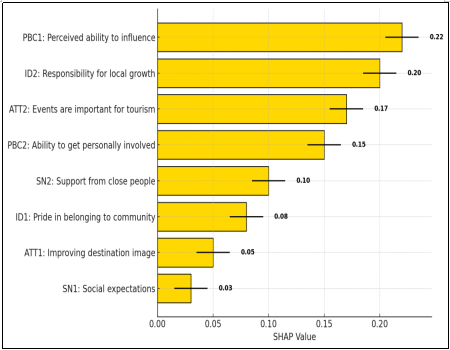
Table 6 presents the relative importance of various factors in predicting support for events, based on SHAP values used to interpret the contribution of each variable within the artificial neural network model. The most influential factor in the model is PBC1: Perceived ability to influence (SHAP = 0.22), indicating that individuals’ perception of their ability to influence the organization and flow of events has the greatest impact on their support. In other words, the more respondents believe they can influence events in their environment, the more likely they are to support them. A similar, though slightly weaker effect is observed for ID2: Responsibility for local growth (SHAP = 0.20), suggesting that a sense of responsibility for the development of the local community significantly contributes to support for tourism events. The third most important factor is ATT2: Events are important for tourism (SHAP = 0.17), showing that respondents who believe events play a key role in the development of tourism in their area are more willing to support them. PBC2: Ability to get personally involved (SHAP = 0.15) also makes a meaningful contribution, confirming that individual perception of one’s ability to personally engage in the organization or promotion of events influences the decision to provide support. Although somewhat lower in impact, SN2: Support from close people (SHAP = 0.10) and ID1: Pride in belonging to community (SHAP = 0.08) are still relevant. These findings indicate that social support from close individuals and feelings of pride in community membership do have an effect, though they are less decisive compared to perceptions of individual control and responsibility.
At the bottom of the list are ATT1: Improving destination image (SHAP = 0.05) and SN1: Social expectations (SHAP = 0.03), suggesting that factors related to destination image and generalized social expectations have the least direct effect on support decisions. Taking into account the reported confidence intervals (±0.015), all factors are statistically significant; however, it is evident that variables associated with individual perceptions of control and responsibility exert the strongest influence on support for events.
Table 6. SHAP Values and confidence intervals
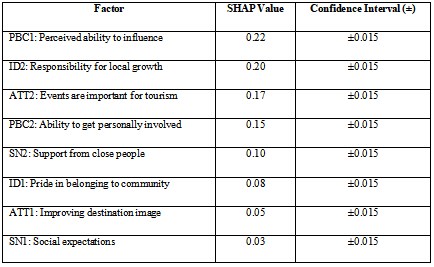
Figure 2 provides a visual representation of the relative importance of factors based on SHAP analysis. It clearly illustrates that individual perceptions of control and a sense of responsibility for local development dominate as key predictors of support for events. In contrast, factors such as destination image and social expectations have a significantly lower impact, confirming that internal motivations and a sense of personal involvement are stronger drivers of support than external social expectations.
Figure 2. SHAP Summary bar chart of factor importance
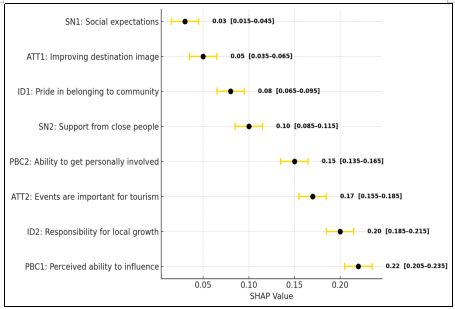
The forest plot illustrates the effects of individual factors in predicting support for events, along with 95% confidence intervals, offering insight into the stability of the model’s estimates. SHAP values clearly indicate which factors have the greatest impact on the dependent variable, while the confidence intervals reflect the reliability of each estimate. The most dominant factor in the model is PBC1: Perceived ability to influence, with a SHAP value of 0.22 and a confidence interval of [0.205, 0.235], indicating that individuals who believe they can influence the organization and implementation of events are more likely to offer support. Close in importance is ID2: Responsibility for local growth (SHAP = 0.20), which confirms that a sense of responsibility for local community development plays a key role in the decision to support events. The third most significant factor is ATT2: Events are important for tourism (SHAP = 0.17), showing that perceiving events as important for tourism development positively correlates with support. PBC2: Ability to get personally involved (SHAP = 0.15) further supports the idea that a sense of personal involvement contributes to support, although to a lesser extent than the broader perception of influence. The factors SN2: Support from close people (SHAP = 0.10) and ID1: Pride in belonging to community (SHAP = 0.08) show moderate yet meaningful associations with support, suggesting that social backing and community pride play a role but are not the primary drivers of the decision. The lowest contributions are seen for ATT1: Improving destination image (SHAP = 0.05) and SN1: Social expectations (SHAP = 0.03), indicating that perceptions of destination branding and social pressure are not central to event support. The relatively narrow confidence intervals for all factors (±0.015) reflect stable estimates and low result variability. These findings reinforce the conclusion that internal motivators—such as feelings of control and responsibility—are stronger predictors of support than external factors like social expectations or destination image (Figure 3).
Figure 3. Impact of factors on event support with confidence intervals
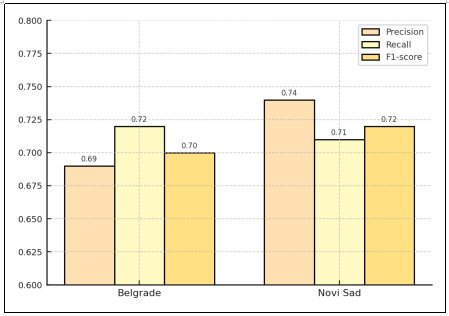
The classification results indicate noticeable differences in response patterns between respondents from Belgrade and Novi Sad. The model was more precise in identifying respondents from Novi Sad (precision = 0.74), suggesting that their answers reflect specific patterns related to attitudes, norms, behavioral control, and identity. On the other hand, respondents from Belgrade exhibited slightly higher recall (recall = 0.72), while the recall for Novi Sad was slightly lower (recall = 0.71). The combined F1-scores demonstrated classification stability for both groups—Belgrade (0.70) and Novi Sad (0.72)—indicating a balanced trade-off between precision and sensitivity. These findings confirm that the differences in perception between the two cities are not random but represent clearly identifiable patterns of thought, which are highly relevant for the strategic planning and targeting of tourism and cultural events in urban environments (Figure 4).
Figure 4.
5. Discussion
The findings of this study confirm that local residents’ support for fairs and tourism events is shaped by a complex interplay of psychological and social factors. All four hypothesized predictors, attitudes, subjective norms, community identification, and perceived behavioral control, were found to have a statistically significant and positive influence on the intention to support events. Among them, community identification emerged as the most powerful predictor, suggesting that a sense of belonging and emotional connection to one’s local environment is a key driver of supportive behavior. This supports the findings of Presenza, Minguzzi, and Petrillo (2018), who demonstrated that strengthening local identity contributes to more sustainable destination management. Similarly, Malchrowicz-Mośko and Poczta (2018) highlight that even small-scale events can enhance residents' pride and sense of belonging, which is consistent with the strong effect of community identification observed in this study.
Attitudes toward events also significantly predicted support, aligning with the work of Folgado-Fernández et al. (2019), who emphasized the importance of residents' positive evaluations in the success of food festivals. However, in our study, the influence of attitudes was slightly weaker than identity- and control-related factors, indicating that cognitive evaluations alone are not sufficient unless accompanied by emotional and participatory engagement. Subjective norms had the lowest predictive power among the four constructs, yet they were still statistically significant. This finding echoes the criticism from Kim and Kaewnuch (2018), who pointed out the limited attention given to social expectations in community-based tourism research. Our results confirm that while social norms contribute to supportive behavior, they are subordinate to more intrinsic motivators such as identity and perceived control.
The importance of perceived behavioral control, both as a construct and through its individual components revealed in the SHAP analysis, indicates that when residents feel capable of influencing or participating in event organization, they are significantly more likely to offer their support. This aligns with An, Kim, and Hur (2021), who emphasize the role of community engagement in the long-term success of event spaces. SHAP results further confirm that the perception of one’s ability to influence and contribute is the most important factor in predictive modeling, surpassing both external pressure and even positive attitudes. This underscores the need to involve local communities not only as audiences but as co-creators of events, as advocated by Laing (2018) in the call for participatory models in festival development.
In addition to confirming the theoretical structure of the TPB model, the machine learning models applied in this study revealed important structural insights. The ANN model demonstrated exceptionally high predictive accuracy, confirming the robustness of the proposed framework. Importantly, the XGBoost classification model was able to accurately distinguish between respondents from Belgrade and Novi Sad based on their response patterns, with an overall accuracy of 71%. This finding reveals that attitudes and perceptions toward tourism events are not homogeneous across urban populations, but rather shaped by local cultural and experiential contexts. Respondents from Novi Sad showed a more distinct pattern in the data, which may reflect their more frequent exposure to cultural and artistic events, including those associated with the city’s European Capital of Culture status. In contrast, the responses from Belgrade residents were more varied, possibly due to the diversity and scale of events typically hosted in the capital city.
Together, these findings confirm all four research hypotheses and demonstrate that TPB constructs are valid predictors of support for tourism events. Moreover, they provide empirical evidence that these predictors are sensitive to local context, reinforcing the call made by Getz and Page (2016) for more community-oriented event research. Ultimately, this study suggests that efforts to increase public support for events should not rely solely on promotion or external expectations, but rather focus on empowering citizens, cultivating a shared sense of ownership, and tailoring engagement strategies to the specific characteristics of each community.
6. Conclusion
The results of this study strongly confirm the relevance of the extended Theory of Planned Behavior (TPB) model in understanding community support for tourism events, while also opening space for new theoretical and applied considerations in the field of event tourism. The inclusion of the community identification construct as a complement to the standard TPB framework proved to be highly valuable, enabling a deeper understanding of the emotional and socio-psychological processes that drive residents to support events in their local environment. Moreover, the use of machine learning models in this context not only validated the robustness of the findings but also revealed notable differences in perception patterns between urban communities, emphasizing the need for context-sensitive approaches in destination planning.
Theoretical and Practical Implications
From a theoretical standpoint, the study underscores the importance of integrating identity-based and affective dimensions into the TPB model, offering a more comprehensive explanation of resident behavior in the context of public events. The model demonstrated both theoretical robustness and practical applicability in urban settings, while machine learning techniques contributed to identifying subtle patterns beyond the reach of traditional regression analyses. Of particular note is the classification model’s ability to distinguish between respondents from Belgrade and Novi Sad, confirming that local context significantly shapes residents’ attitudes and intentions to support events.
Practically speaking, the findings make it clear that public support cannot be generated solely through informational campaigns and promotional efforts. Instead, strategies should aim to foster emotional attachment to events and develop a sense of shared identity. Practices that include residents in decision-making, co-creation, and volunteer engagement can significantly improve perceived relevance and increase active support. Furthermore, promotional approaches should be adapted to local values, experiences, and community capacities, as a one-size-fits-all strategy may prove ineffective or even counterproductive.
Limitations and Directions for Future Research
Despite the valuable insights it offers, this study has certain limitations. It focused exclusively on two urban centers and relied on purposive sampling and self-reported data, which may affect the generalizability and external validity of the findings. In addition, the cross-sectional design limits the ability to observe changes in attitudes over time, and the purely quantitative approach may not capture deeper individual or contextual motivations underlying support behaviors.
Future research should consider expanding the analysis to include a wider range of destination types, including smaller towns and rural areas, to test the generalizability of the model. Longitudinal designs would allow for the monitoring of shifts in community support before, during, and after events, while the integration of quantitative and qualitative methods would provide richer insights into the meanings and motivations residents assign to tourism events. Incorporating additional theoretical perspectives, such as social capital theory or emotional appraisal models, could further enhance analytical depth and contribute to more sustainable and participatory event tourism development.
Acknowledgments: This research was supported by the Ministry of Science, Technological De-velopment and Innovation of the Republic of Serbia (Contract No. 451-03-136/2025-03/200172).
References
2.Almeida, A., S. J. Teixeira, and M. Franco. 2019. "Uncovering the Factors Impacting Visitor’s Satisfaction: Evidence from a Portfolio of Events." International Journal of Event and Festival Management 10 (3): 217–247. https://doi.org/10.1108/IJEFM-01-2019-0002.
3. An, J., H. Kim, and D. Hur. 2021. "Keeping the Competitive Edge of a Convention and Exhibition Center in MICE Environment: Identification of Event Attributes for Long-run Success." Sustainability 13 (9): 5030. https://doi.org/10.3390/su13095030.
4.Anderson, D. R., T. A. Williams, and J. J. Cochran. 2020. Statistics for Business & Economics. Boston: Cengage Learning.
5. Cassar, J., J. Whitfield, and A. Chapman. 2020. "Contemporary Factors Influencing Association Conference Attendance." Journal of Convention & Event Tourism 21 (1): 57–90. https://doi.org/10.1080/15470148.2020.1719948.
6.Chen, S.-H., and A. Tham. 2019. "Trends in Tourism-related Academic Conferences: An Examination of Host Locations, Themes, Gender Representation, and Cost." Event Management 23 (4–5): 733–751. https://doi.org/10.3727/152599519X15506259855670
7. Chernyshev, K. A., I. N. Alov, Y. Li, and T. Gajić. 2023. "How Real Is Migration’s Contribution to the Population Change in Major Urban Agglomerations?" Journal of the Geographical Institute Jovan Cvijić SASA 73 (3): 371–378. https://doi.org/10.2298/IJGI2303371C.
8.De Albuquerque Meneguel, C. R., L. Mundet, and S. Aulet. 2019. "The Role of a High-quality Restaurant in Stimulating the Creation and Development of Gastronomy Tourism." International Journal of Hospitality Management 83: 220–228. https://doi.org/10.1016/j.ijhm.2018.10.018.
9.Dolasinski, M. J., C. Roberts, J. Reynolds, and M. Johanson. 2021. "Defining the Field of Events." Journal of Hospitality & Tourism Research 45 (3): 553–572. https://doi.org/10.1177/1096348020978266.
10.Dziekański, P., Ł. Popławski, and J. Popławska. 2024. "Interaction Between Pro-Environmental Spending and Environmental Conditions and Development." Journal of the Geographical Institute Jovan Cvijić SASA 74 (3): 329–345. https://doi.org/10.2298/IJGI2403329D.
11. Edelheim, J. R., K. Thomas, K. G. Aberg, and G. Phi. 2018. "What Do Conferences Do? What is Academics’ Intangible Return on Investment (ROI) from Attending an Academic Tourism Conference?" Journal of Teaching in Travel & Tourism 18 (1): 94–107. https://doi.org/10.1080/15313220.2017.1407517.
12. Frew, E., and L. White. 2015. "Commemorative Events and National Identity: Commemorating Death and Disaster in Australia." Event Management 19 (4): 509–524. https://doi.org/10.3727/152599515X14465748512722.
13.Folgado-Fernández, J. A., E. Di-Clemente, and J. M. Hernández-Mogollón. 2019. "Food Festivals and the Development of Sustainable Destinations. The Case of the Cheese Fair in Trujillo (Spain)." Sustainability 11 (10): 2922. https://doi.org/10.3390/su11102922.
14.Gajić, T., Vukolić, D., and Knežević, S., 2024. "Uređenje efikasnosti i personalizacije usluga putem primene veštačke inteligencije u hotelskoj industriji'. Ekonomist, 3(2), pp. 10–30. https://doi.org/10.46793/EKONOMIST3.2.1G
15.Gajić, T., Djoković, F., Vukolić, D. and Bugarčić, J., 2024. 'Принцип Zero Waste у функцији повећања економског развоја у хотелском пословању'. Ekonomist, 3(1), pp. 23–45. https://doi.org/10.46793/EKONOMIST3.1.2G
16.Getz, D., and S. J. Page. 2016. "Progress and Prospects for Event Tourism Research." Tourism Management 52: 593–631. https://doi.org/10.1016/j.tourman.2015.03.007.
17. Hamm, S., E. Frew, and C. Lade. 2018. "Hybrid and Virtual Conferencing Modes Versus Traditional Face-to-Face Conference Delivery: A Conference Industry Perspective." Event Management 22 (5): 717–733. https://doi.org/10.3727/152599518X15299559637635.
18.Higgins-Desbiolles, F. 2018. "Event Tourism and Event Imposition: A Critical Case Study from Kangaroo Island, South Australia." Tourism Management 64: 73–86. https://doi.org/10.1016/j.tourman.2017.08.002.
19.Hemmonsbey, J. D., and T. M. Tichaawa. 2019. "Strategic Planning of Sport Tourism Events on Destination Brands: Examining the Role of Home-grown Sport." GeoJournal of Tourism and Geosites. Available from: http://dx.doi.org/10.30892%2Fgtg.26310-398.
20.Hernández-Mogollón, J. M., E. Di-Clemente, and A. M. Campón-Cerro. 2020. "Culinary Travel Experiences, Quality of Life and Loyalty." Spanish Journal of Marketing – ESIC 24 (3): 425–446. https://doi.org/10.1108/SJME-11-2019-0094
21. Kim, Y. H., and K. Kaewnuch. 2018. "Finding the Gaps in Event Management Research: A Descriptive Meta-analysis." Event Management 22 (3): 453–467. https://doi.org/10.3727/152599518X15258922919408.
22.Kyriazos, T., and M. Poga-Kyriazou. 2023. "Applied Psychometrics: Estimator Considerations in Commonly Encountered Conditions in CFA, SEM, and EFA Practice." Psychology 14 (5): 799–828. https://doi.org/10.4236/psych.2023.145043
23.Laing, J. 2018. "Festival and Event Tourism Research: Current and Future Perspectives." Tourism Management Perspectives 25: 165–168. https://doi.org/10.1016/j.tmp.2017.11.024.
24.Malchrowicz-Mośko, E., and J. Poczta. 2018. "A Small-scale Event and a Big Impact—Is This Relationship Possible in the World of Sport? The Meaning of Heritage Sporting Events for Sustainable Development of Tourism—Experiences from Poland." Sustainability 10 (11): 4289. https://doi.org/10.3390/su10114289.
25.Meeprom, S., and T. Silanoi. 2020. "Investigating the Perceived Quality of a Special Event and Its Influence on Perceived Value and Behavioural Intentions in a Special Event in Thailand." International Journal of Event and Festival Management 11 (3): 337–355. https://doi.org/10.1108/IJEFM-09-2019-0043.
26.Padilla, J. J., H. Kavak, C. J. Lynch, R. J. Gore, and S. Y. Diallo. 2018. "Temporal and Spatiotemporal Investigation of Tourist Attraction Visit Sentiment on Twitter." PloS One 13 (6): e0198857. https://doi.org/10.1371/journal.pone.0198857.
27.Pan, I., L. R. Mason, and O. K. Matar. 2022. "Data-Centric Engineering: Integrating Simulation, Machine Learning and Statistics. Challenges and Opportunities." Chemical Engineering Science 249: 117271. https://doi.org/10.1016/j.ces.2021.117271.
28. Prdić, N. 2012. “Effects of a companys appearance at the fair”. Anali ekonomskog fakulteta u Subotici, Ekonomski fakultet, Subotica, 28, 133-143.
29.Prdić, N. 2017. Competition of Fairs on the Basis of the Composition Distribution, Industrija, Vol. 45. no 3, 23-37. https://doi.org/10.5937/industrija45-13274
30.Presenza, A., A. Minguzzi, and C. Petrillo. 2018. "Managing Wine Tourism in Italy." Journal of Tourism Consumption and Practice 2 (1): 46–61. Available from: https://www.semanticscholar.org/paper/Managing-Wine-Tourism-in-Italy.-Managing-Wine-in-Presenza-Minguzzi/8b0c3c1a1cb68aa1c91ef254dada5a77780b3f48
31.Ratkowski, W., and J. Ratkowska. 2018. "Sports Events as a Determinant of Sport Tourism." Baltic Journal of Health and Physical Activity 10 (1): 9. https://doi.org/10.29359/BJHPA.10.1.09.
32.Rossanty, Y., M. D. T. P. Nasution, and I. Irawan. 2019. "Communication and Customer Relations Strategy in Improving Hotel Guests’ Satisfaction in Samosir Tourism Area, North Sumatra, Indonesia." International Journal of Management (IJM) 10 (6). https://doi.org/10.34218/IJM.10.6.2019.009.
33.Rubinger, L., A. Gazendam, S. Ekhtiari, N. Nucci, A. Payne, H. Johal, and M. Bhandari. 2020. "Maximizing Virtual Meetings and Conferences: A Review of Best Practices." International Orthopaedics 44: 1461–1466. https://doi.org/10.1007/s00264-020-04615-9
34.Sahu, P. 2020. "Closure of Universities Due to Coronavirus Disease 2019 (COVID-19): Impact on Education and Mental Health of Students and Academic Staff." Cureus 12 (4). https://doi.org/10.7759/cureus.7541
35.Tien, N. H., H. T. Dung, and N. V. Tien. 2019. "Branding Building for Vietnam Tourism Industry Reality and Solutions." International Journal of Research in Marketing Management and Sales 1 (2): 63–68. https://doi.org/10.33545/26633329.2019.v1.i2a.19.
36.Tonga Uriarte, Y., T. Antognozzi, and M. L. Catoni. 2019. "Investigating Tourism Impacts of Festivals: An Exploratory Case Study of a Big-scale Comic-Con." Event Management 23 (6): 817–833. https://doi.org/10.3727/152599519X15506259855823.
37.Vinyals-Mirabent, S. 2019. "European Urban Destinations’ Attractors at the Frontier Between Competitiveness and a Unique Destination Image. A Benchmark Study of Communication Practices." Journal of Destination Marketing & Management 12: 37–45. https://doi.org/10.1016/j.jdmm.2019.02.006.
38.Wang, Y., and X. Jin. 2019. "Event-based Destination Marketing: The Role of Mega-events." Event Management 23 (1): 109–118. https://doi.org/10.3727/152599518X15378845225384
Published in
Vol. 12 No. 1 (2026)
Keywords
🛡️ Licence and usage rights
This work is published under the Creative Commons Attribution 4.0 International (CC BY 4.0).
Authors retain copyright over their work.
Use, distribution, and adaptation of the work, including commercial use, is permitted with clear attribution to the original author and source.
Interested in Similar Research?
Browse All Articles and Journals