
ANALIZA SENTIMENTA ZASNOVANA NA VEŠTAČKOJ INTELIGENCIJI KAO POKRETAČ TRANSFORMACIJE DIGITALNOG MARKETINGA IZ PERSPEKTIVE PERCEPCIJE POTROŠAČA, ONLAJN SENTIMENTA I KUPOVNOG PONAŠANJA

Apstrakt
Razumevanje emocija i stavova potrošača izraženih u digitalnom okruženju jedan je od ključnih izazova savremenog digitalnog marketinga. Iako se analiza raspoloženja zasnovana na veštačkoj inteligenciji sve više koristi za tumačenje sadržaja koji generišu korisnici, ograničen broj istraživanja istovremeno razmatra njegovu percepciju zajedno sa raspoloženjem na mreži i poverenjem potrošača u objašnjavanju ponašanja pri kupovini. Cilj ovog rada je ispitivanje veze između percepcije analize raspoloženja zasnovane na veštačkoj inteligenciji, raspoloženja na mreži, poverenja potrošača i ponašanja pri kupovini u digitalnom marketingu. Empirijsko istraživanje je sprovedeno korišćenjem strukturiranog upitnika na uzorku od 138 ispitanika. Kronbahov alfa koeficijent je korišćen za procenu pouzdanosti instrumenta, dok su hipoteze testirane korišćenjem Pirsonovog hi-kvadrat testa, Pirsonovog koeficijenta korelacije i Spirmanovog koeficijenta korelacije. Rezultati potvrđuju statistički značajne pozitivne veze između posmatranih konstrukta i ukazuju na to da su percepcija analize raspoloženja zasnovane na veštačkoj inteligenciji, pozitivno raspoloženje na mreži i poverenje potrošača povezani sa povoljnijim ponašanjem pri kupovini u digitalnom okruženju. Rezultati istraživanja doprinose boljem razumevanju uloge emocionalnih i psiholoških faktora u digitalnom marketingu i predstavljaju osnovu za buduća istraživanja koja će uključivati objektivne modele analize raspoloženja i naprednije metodološke pristupe.
Članak
Introduction
In contemporary business conditions, digital technologies have become an indispensable part of marketing activities. The development of electronic commerce, social networks and mobile communication platforms has enabled organizations to access significant amounts of data about consumers, thus creating the conditions for a more precise understanding of their behavior and making more effective marketing decisions. Unlike traditional marketing, digital marketing enables personalized communication, more precise targeting of users and continuous monitoring of their reactions to marketing activities. As a result, data has become one of the most important resources for making marketing decisions and developing a competitive advantage in the modern market (Ryan, 2016).
Contemporary digital technologies are now changing the ways in which businesses communicate with clients and manage their marketing plans and budgets. The use of artificial intelligence makes it possible to make data-driven business decisions, including those related to marketing. In particular, modern technologies allow companies to make the best marketing decisions considering customers’ behaviour and sentiments online instead of using conventional methods.
The global community is ruled by people's sentiments. Social media has given previously “silent” consumers a voice, while giving businesses the ability to track how their brand is perceived. The development of digital platforms has made it possible for insight into consumer attitudes to no longer be the privilege of large companies, but has also become accessible to small businesses (Goldberg, 2024). At the same time, the application of artificial intelligence in sentiment analysis significantly improves the processing of large and unstructured customer data sets, thereby obtaining more precise insight into their opinions and attitudes (Sánchez-Núñez et al., 2020). Sentiment analysis is a method that uses computers to recognize feelings, attitudes, and opinions in text data and is today an important tool for monitoring user feedback (Manasa & Padma, 2019). Therefore, it plays a significant role in marketing personalization and service customization, as it allows for the analysis of digital consumer behavior in real time and on a large scale (Giatsoglou et al., 2017).
One of the key technologies that enables the development of sentiment analysis is natural language processing (NLP). In a digital environment where huge amounts of textual data are generated every day, natural language processing (NLP) allows computers to “understand” human language – that is, to analyze, interpret, and process it. Thanks to this, it is possible to systematically process large amounts of content from social networks, forums, and online review platforms. By combining NLP techniques and machine learning algorithms, organizations can identify emotional patterns, attitudes and preferences of users, which contributes to more accurate prediction of their future behavior (Cambria, & White, 2014).
Knowing the purchasing intentions of consumers is of great importance because they can indicate future purchasing behavior. In a social commerce environment, social capital represents an important source of information about consumer wants and needs. The formation of purchase intention is influenced by various factors, including consumers' personal motives, expectations regarding the price of the product, and the benefits that the purchase may bring (Schiffman et al., 2012). In this process, social media content plays a significant role as it can encourage consumers to make a purchase after interacting with the brand's content. Also, marketing activities on social networks and user engagement on brand pages have a positive effect on purchase interest and positive word-of-mouth (WOM), as well as on all three phases of the purchase decision-making process – cognitive, affective and conative phase (Hutter et al., 2013).
Consumer behavior in the digital environment is shaped by numerous technological and social factors. Online reviews, electronic word of mouth (eWOM), social media comments and digital marketing content have a significant impact on product perception and purchase decisions. Modern consumers increasingly search the opinions of other users before making a purchase decision, which is why understanding the factors that influence online shopping behavior is one of the key issues of modern marketing research (Cheung & Thadani, 2012).
Davenport et al. (2020) point out that through the application of machine learning, predictive analytics and automated decision-making systems, the ability to understand consumer needs is significantly improved, the management of marketing campaigns is optimized and the overall user experience is improved. Such approaches have gained particular importance in the conditions of the rapid growth of digital data, which have enabled the wider use of tools for automatic processing of large sets of information, identifying patterns of user behavior and generating useful business insights.
While previous research has treated sentiment analysis, consumer engagement, and trust separately, few studies have looked at these factors together within a single model for predicting purchasing behavior in digital marketing. Additionally, while AI-based tools are advancing rapidly, the results on their ability to predict user behavior are not yet fully consistent and remain partially disjointed. Therefore, there is a need for additional research that will examine how AI-based sentiment analysis, online sentiment and consumer trust influence consumer purchase behavior in the digital environment.
Although AI-based sentiment analysis is commonly investigated through algorithmic approaches, this study focuses on consumers' perceptions of AI-supported sentiment interpretation in digital environments. The rationale for this approach is that consumers respond primarily to perceived sentiment cues and their interpretation rather than to the technical characteristics of AI systems themselves.
The aim of this research is focused on three interrelated aspects. First, it examines consumers' perceptions of AI-based sentiment analysis and the extent to which these perceptions shape their purchase behavior in digital marketing. Second, it analyzes how online sentiment affects the degree of consumer engagement with digital marketing content. Third, the role of consumer trust as a factor that modifies their purchasing behavior in the digital environment is discussed.
On the one hand, the results of the research could be used as a basis for gaining a more comprehensive understanding of how artificial intelligence technologies could be applied to improve the efficiency of marketing planning and optimize the allocation of marketing resources.
To examine the role of perceived AI-based sentiment analysis in digital marketing, this study empirically tests the following research hypotheses:
H1: Perceived AI-based sentiment analysis (online consumer sentiment) is significantly associated with consumer purchase behaviour in digital marketing.
H2: Online sentiment positively influences consumer engagement with digital marketing content.
H3: Consumer trust positively influences consumer purchase behaviour in digital marketing environments.
Literature Review
AI-Based Sentiment Analysis and Consumer Purchase Behaviour
Companies today rely more and more on the analysis of consumer data in order to align the offer and communication with the individual habits of customers, the result is more satisfied customers and longer-term business relationships (Ryan, 2016). The market value of artificial intelligence in marketing could exceed 107 billion dollars by 2028, which analysts interpret as an indicator of a deep transformation of this sector (Guttmann, 2026).
Artificial intelligence has ceased to be a secondary tool and has become the nervous system of modern business planning, which growing investments unequivocally confirm (Patel et al., 2023). Algorithms in the background of digital services now recognize the needs of users before they themselves become aware of such needs, thus moving away from reactive models to anticipatory ones. This ability to anticipate directly redefines the rules of engagement between consumers and brands, while the subtlety of curated recommendations blurs the line to such an extent that the average user rarely registers the presence of a technical intermediary. Nevertheless, it is precisely this invisible mechanism that determines what will be offered to them next, which raises the question of the autonomy of choice in the digital environment. Identification of real consumer needs, more precise positioning of offers, and more efficient promotion of products and services are achieved through advanced algorithmic models that dominate modern marketing practice (Mari, 2019).
Generative artificial intelligence started to penetrate a wide range of digital marketing areas, including automated email marketing, search engine optimization, social media, and paid advertising (Digital Marketing Institute, 2025). Faster content production and tailoring of messages to different audience segments frees up time for strategic planning, but at the same time raises issues of reliability of generated material, data protection and long-term effects on organic visibility. This tension between efficiency and risk imposes a practice of continuous improvement and adaptation to new working conditions, without which a technological advantage can quickly become a limitation.
The analysis of large data sets has enabled marketers to recognize patterns in consumer behavior that manual processing would have left unnoticed, and based on these insights it is possible to adapt campaigns to specific characteristics of target segments (de Vries et al., 2012). For this purpose, machine learning and natural language processing techniques are increasingly being used, which expand the capabilities of experts for far more complex operations than the previous possibilities (Gandomi & Haider, 2015). When the algorithms in the background of the service adjust the offer to individual behavior patterns in real time, users are faced with content that seems almost intuitively suitable for them, which directly reflects on stronger engagement, more conversions and more pronounced brand loyalty (Rakhmanita et al., 2023). It is precisely this ability to predict latent needs that represents a qualitative difference compared to earlier approaches. On the other hand, freeing teams from repetitive operations through automation allows human resources to be directed to issues that shape the company's long-term position in the market, and not just to maintaining current flows (Bughin et al., 2018).
Automated sentiment analysis provides quick insight into brand perception, but loses reliability in the face of irony, regionalisms and cultural codes (Cambria et al., 2020). Additional uncertainty comes from the cases when users formulate their opinion in line with the expectations of the community and not according to their own convictions (Wankhade et al., 2022). Therefore, isolated sentiment measurements can give a disorienting picture and should be correlated with competitive indicators and the macroeconomic context in order to avoid misjudging the real market sentiment (Shayaa et al., 2018).
The specialized jargon of the IT industry changes shapes rapidly, so generic sentiment models often miss contextual nuances (Poria et al., 2015). Therefore, custom data sets are applied that increase the accuracy of the interpretation. Modern systems based on transformational architecture more easily handle multilingual content and regional varieties of English (Hung et al., 2020). However, technology alone does not bring value if the findings are not translated into concrete actions. The rapid detection of patterns in large amounts of data enables companies to take preventive action, while manual processing would achieve such speed (Chen et al., 2016). The key is to close the feedback loop, because without it the data collection remains a dead letter.
Positive affect in digital discussions functions as a social proof mechanism that directly influences purchase decisions (de Vries et al., 2012). When a potential customer sees the satisfactory experiences of others, the perception of quality increases and the fear of making a bad decision decrease. Analyzing emotional tone enables the recognition and quantification of those patterns, thereby opening up the space for strategies that resonate with existing community attitudes (Liu, 2012).
Automatic detection of emotional tone in textual content has advanced significantly thanks to deep neural networks that can process context, multiple languages, and figurative speech (Giatsoglou et al., 2017). However, this universality remains on paper when the models are confronted with the specificities of individual industries that were not part of the initial training. According to Wankhade et al. (2022), adapting AI models to different areas of activity with consideration of cultural specifics is a complicated task. That is why the authors propose to use local specifics in each particular case instead of relying on universal solutions.
Online Sentiment and Consumer Engagement
In the context of social media, consumer engagement is defined as the exchange of business-related social media communications between customers and companies (Oh et al., 2017). Consumer engagement on social media depends on several factors, among which the experience that users have with the brand, the characteristics of the content, the type of media used and the time of publication of the content (Cvijikj & Michahelles, 2013). In practice, the level of engagement is most often assessed based on the number of user reactions, such as likes, shares and comments on brand posts. In addition to these forms of interaction, user communication through responding to messages on social networks is considered a significant indicator of engagement (Chu et al., 2020).
According to research, positive customer engagement contributes to creating a more favorable image of the brand and strengthening its reputation (Rissanen, & Luoma-Aho, 2016). In addition, it can foster greater consumer loyalty, a sense of connection with the brand, emotional attachment and a sense of empowerment. This type of engagement often affects the formation of purchase intentions and decision making, which can result in increased sales and profitability of the company (Barger et al., 2016). On the other hand, negative engagement most often results from unfulfilled expectations of consumers, their personal values and emotional reactions.
Consumers engage for a variety of reasons, the most common of which are personal interest, entertainment, rewards, and information exchange. Special emphasis is placed on the internal motivation that drives individuals to respond to content that resonates with their needs (Rissanen & Luoma-Aho, 2016). With hedonic brands, such as fashion houses, engagement peaks when the consumer feels an emotional attachment and passion for the brand, which prompts active communication and feedback. Merrilees (2016) adds that the willingness to share content does not derive only from the message itself, but also from the attitude towards the brand that is the result of the emotional, psychological or physical investment of the consumer in it. It is this cumulative investment that determines the depth of the relationship and readiness for further interaction.
Kumar (2020) points out that sentiment analysis and emotional artificial intelligence enable businesses to overcome functional personalization and build relationships based on a true understanding of user emotions. Such an approach results in encounters enriched with compassion, which directly influence the strengthening of loyalty. However, Sande et al. (2024) note that the models are still deficient in terms of capturing slang and context specific to electronic conversations. Those technical limitations do not diminish the potential, but impose the need for caution in the interpretation of the results and continuous improvement of the system in order to achieve reliability that matches the ambitions of the application.
In e-commerce, companies often use sentiment analysis to better understand what they like or dislike about a product through customer comments and reviews. In this way, they can identify which elements of the product have the greatest impact on user satisfaction. Although this field has advanced technologically, there is still a limitation because most research deals with the overall, general impression of a product or brand, while ignoring more detailed aspects, such as individual words and themes that shape customer experience and satisfaction (Mabokela et al., 2023).
Thanks to the development of technologies such as artificial intelligence, cloud computing and the Internet of Things, e-commerce is experiencing a rapid increase in the number of users. This is why analyzing customer ratings and feedback has become key to retaining existing customers and attracting new ones. According to Gooljar et al. (2024), the analysis of customers’ voices is a valuable source of evidence to predict the success of a product on the market, including such indicators as customer satisfaction and shifting trends. Those unfiltered consumer voices, often overlooked in traditional research, provide early signaling of how an offer will be received before sales results manifest. Precisely because of this anticipatory value, the analysis of spontaneous digital discourse is becoming an increasingly important tool in assessing future market behavior.
Sentiment metrics represent a set of methods and quantitative indicators that are used to measure the emotional tone expressed in the text, most often as a positive, negative or neutral sentiment. In practice, it is based on approaches such as lexical databases and machine learning algorithms, whereby each text or post is assigned a certain "sentiment score" that enables the analysis of user attitudes on large data sets (Liu, 2012). One of the frequently used tools in the analysis of social media is the VADER model, which is specially adapted to short and informal texts and enables precise determination of sentiment intensity (Hutto & Gilbert, 2014).
De Vries et al. (2012) found that branded content colored with a positive emotional tone achieves significantly more interactions in the form of likes, comments and shares. That effect is not accidental, but stems from the tendency of users to engage more actively in communication when they recognize an affirmative tone, which directly affects the visibility and success of marketing campaigns. It is precisely this dynamic that makes positive sentiment not only an indicator of satisfaction, but also an active driver of spreading the message among wider segments of the audience. Also, positive emotional messages can increase users' trust and willingness to interact, thereby further improving the overall level of engagement in the digital environment (Stieglitz & Dang-Xuan, 2013).
The study conducted by Wankhade et al. (2022) shows that sentiment analysis models enable firms to identify shifting in audiences’ sentiments before they transform into recognizable trends. Through the processing of user-generated content, algorithms detect patterns of attitudes and emotional reactions that precede a purchase decision. This ability of early detection transforms sentiment analysis from passive monitoring into an active predictive instrument, which opens up space for timely adjustment of the offer.
Consumer Trust and Purchase Behaviour in Digital Environments
Trust is the foundation on which any sustainable business relationship is built, especially in a digital environment where physical contact between parties is lacking (Laely, 2016). Diza et al. (2016) define it as a belief in the reliability of other people's statements, and in the context of trade it becomes a decisive factor that determines whether the transaction will take place at all. Customers who have a high level of trust in a company are more likely to be satisfied with products and services, which keeps them and attracts new ones. In online business, its importance is even more pronounced, because it directly affects the reduction of suspicion about the intentions of the other party and enables transactions to proceed smoothly. In such conditions, users evaluate not only the quality of the offer, but also the seller's attitude towards them, which is ultimately reflected in their perception and satisfaction.
Roggeveen et al. (2012) point out that the reputation of the platform, the clarity of the offer and the protection of data shape the perception of security among users, which is crucial for the formation of trust in the online environment. Forsythe and Shi (2003) add that the lack of direct contact between buyer and seller makes that trust a necessary mechanism to reduce the perceived riskiness of transactions. Ballı (2025) warns that without appropriate security protocols, the consumer often abandons the interaction with the brand before it has even begun. Precisely because of this, the protection of privacy and personal data is not only a technical requirement, but a crucial factor that determines whether a purchase will occur at all.
Trust in the online environment is one of the key prerequisites for the functioning of electronic commerce, because users in the digital space face anonymity, uncertainty and limited control over transactions. In such conditions, trust develops through the perception of safety, reliability and privacy protection, which directly affects the willingness of users to participate in online shopping (Büttner & Göritz, 2008). Also, lack of trust is often associated with fear of data misuse and uncertainty regarding the outcome of a transaction, which is why security and privacy mechanisms are critical to developing trust in a digital environment (Thaw et al., 2009).
In social commerce, where every interaction remains visible to a wider audience, brands that consistently demonstrate transparency and security are significantly better positioned to build lasting connections with users (Lăzăroiu et al., 2020). Trust in this context is not an abstract category, but a concrete belief of the consumer that the platform will honor its promises about the quality of the offer and the protection of transactions. Precisely because of the frequency and publicity of these interactions, the perception of reliability becomes a key differentiating factor that determines whether the user will remain engaged or switch to a competitor.
Trust and risk perception are closely related concepts, with a higher level of perceived risk (financial, functional or privacy risk) reducing the level of consumer trust in the online environment. Research shows that privacy and security concerns significantly influence the purchase decision, with trust acting as a mediator between risk perception and purchase intention (Fortes et al., 2017). Also, in social commerce, risk perception directly shapes user attitudes, while trust mitigates the negative effects of uncertainty and increases willingness to buy (Lăzăroiu et al., 2020).
Fortes et al. (2017) point out that trust directly affects consumer purchase intention, satisfaction and loyalty. A high level of confidence in the platform or brand increases the probability of not only initial, but also repeated purchases from the same seller. Lăzăroiu et al. (2020) add that this trust in the long term contributes to building a stable relationship between the consumer and the company, which is manifested in more frequent repeat purchases and a more positive attitude towards the brand.
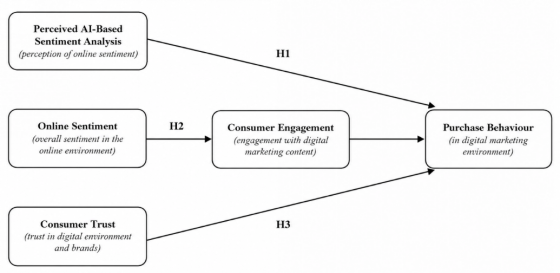
Based on the presented theoretical considerations and the results of previous research, a conceptual research model was developed. The model integrates key constructs identified in the literature and shows the hypothesized relationships between perceived AI-based sentiment analysis, online sentiment, consumer trust and consumer purchase behavior. The proposed model represents a theoretical framework for the empirical verification of the set research hypotheses.
Figure 1. Proposed conceptual research model
Source: Authors
The conceptual research model is based on the assumption that perceived AI-based sentiment analysis, online sentiment and consumer trust represent significant determinants of consumer buying behavior in digital marketing, whereby the model includes three independent variables and one dependent variable with assumed direct positive relationships between the constructs. The model is exploratory and based on correlational relationships rather than causal inference. The arrows in the model show the relationships defined by hypotheses that are examined in the research, where the first hypothesis refers to the relationship between perceived AI-based sentiment analysis (operationalized through the perception of online consumer sentiment) and purchasing behavior, the second to the influence of online sentiment on consumer engagement with digital marketing content, and the third to the influence of consumer trust on their purchasing behavior. This conceptual framework enables the understanding of the key factors that shape consumer behavior in the digital environment and represents the basis for empirical verification of the assumed relationships between the observed variables.
In addition to their impact on consumer behaviour, the concepts described have implications for managerial practice. More accurate knowledge of online public opinion and consumer attitudes, as well as an understanding of the opportunities and limitations of artificial intelligence for analysing such data, can help companies optimize their marketing strategies and the allocation of the marketing budget, thereby addressing one of the key challenges of modern marketing.
Materials and Methods
Research Instrument
The empirical study was conducted using a structured questionnaire consisting of closed-ended statements measured on a five-point Likert scale ranging from 1 (Strongly disagree) to 5 (Strongly agree). The questionnaire was designed to examine three constructs related to digital marketing: perceived AI-based sentiment analysis, online consumer engagement, and consumer trust as determinants of purchase behaviour.
Perceived AI-based sentiment analysis, as a conceptual framework, is operationalized through users’ perceptions of online consumer sentiment. Therefore, the study does not perform automated sentiment analysis using AI models, but rather measures consumers’ perception of sentiment signals derived from digital environments.
The items in the questionnaire were developed based on a review of relevant literature in the field of sentiment analysis, consumer engagement on social networks, consumer trust and purchasing behavior in the digital environment. The wording of the questions was adapted to the objectives of this research in order to cover the key aspects of the observed constructs. The study complied with the ethical principles of voluntary participation, anonymity and confidentiality.
Sample and Data Collection
Data were collected through an online survey. The questionnaire was distributed electronically using the contact database of various higher education institutions located in the City of Belgrade, Serbia. Participation in the research was voluntary and anonymous. Before filling out the questionnaire, the respondents were informed about the purpose of the research and gave their consent to participate. A total of 138 fully completed and valid questionnaires were included in the final analysis.
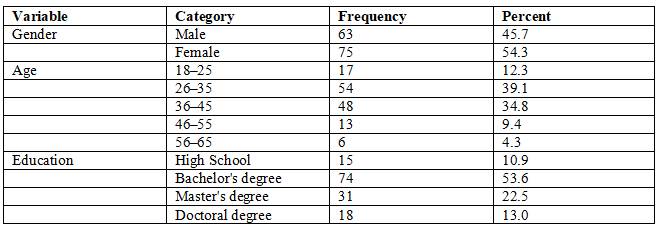
The sample consisted of 63 male respondents (45.7%) and 75 female respondents (54.3%). Respondents were between 18 and 65 years of age. The largest age group was 26–35 years (39.1%), followed by respondents aged 36–45 years (34.8%), while the smallest group was 56–65 years (4.3%).
The educational structure of the respondents is presented in Table 1. Most respondents held a bachelor's degree (53.6%), followed by a master's degree (22.5%), a doctoral degree (13.0%), and a high school diploma (10.9%).
Table 1. Demographic Characteristics of Respondents
Reliability and Data Analysis
Each construct was measured using multiple Likert-scale items, which were aggregated into composite scores for statistical analysis. The internal consistency of the measurement scale was evaluated using Cronbach's Alpha coefficient. The results indicate excellent reliability (α = 0.904) for the six-item measurement instrument. Given that Cronbach's alpha coefficient exceeds the recommended threshold of 0.70, it can be concluded that the instrument has satisfactory internal consistency.
Table 2. Reliability Statistics

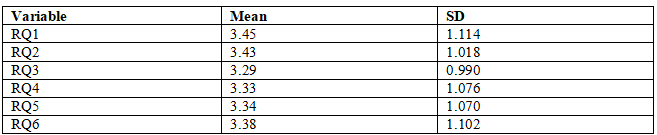
Descriptive statistics show moderate to relatively high mean values for all observed variables, ranging from 3.29 to 3.45, indicating generally positive perceptions of perceived AI-based sentiment analysis and its role in digital marketing.
Table 3. Descriptive Statistics
All statistical analyses were performed using IBM SPSS Statistics. Hypotheses were tested using Pearson Chi-Square, Pearson's correlation coefficient, and Spearman's rank correlation coefficient. Statistical significance was accepted at the 0.05 level.
Results
Testing of Hypothesis H1
H1: Perceived AI-based sentiment analysis (online consumer sentiment) is significantly associated with consumer purchase behaviour in digital marketing.
RQ1: To what extent can perceived AI-based sentiment analysis predict consumer purchase behaviour?
RQ2: Is there a significant relationship between consumer sentiment expressed online and purchase decisions?
Table 4. Results of Hypothesis H1

The results revealed a statistically significant association between perceived AI-based sentiment analysis and consumer purchase behaviour (χ² = 139.532, df = 16, p < 0.001). Pearson's correlation coefficient indicated a strong positive relationship (r = 0.631), while Spearman's correlation confirmed this association (ρ = 0.616, p < 0.001).
These findings support H1, demonstrating a statistically significant positive relationship between perceived AI-based sentiment analysis and consumer purchase behaviour. Respondents with more positive perceptions of AI-supported sentiment interpretation tended to report more favourable purchase behaviour in digital marketing environments.
Testing of Hypothesis H2
H2: Online sentiment positively influences consumer engagement with digital marketing content.
RQ3: How does online sentiment influence consumer engagement with digital marketing content?
RQ4: Do consumers exposed to positive online sentiment engage more with digital marketing content?
Table 5. Results of Hypothesis H2

Statistical testing provided consistent evidence in support of the hypothesized relationship between online sentiment and consumer engagement. The obtained results show a statistically significant relationship (χ² = 150.849, df = 16, p < 0.001), while Pearson's (r = 0.511) and Spearman's coefficient (ρ = 0.544, p < 0.001) indicate a positive relationship between positive online sentiment and a higher level of user engagement with digital marketing content.
Testing of Hypothesis H3
H3: Consumer trust positively influences consumer purchase behaviour in digital marketing environments.
RQ5: How does consumer trust influence consumer purchase behaviour in digital marketing environments?
RQ6: Are consumers with higher levels of trust more likely to make purchase decisions online?
Table 6. Results of Hypothesis H3

The results of the analysis confirm that consumer trust is significantly related to their purchasing behavior in the digital environment. The chi-square test showed a statistically significant relationship (χ² = 70.108, df = 16, p < 0.001), while Pearson's coefficient (r = 0.546) and Spearman's coefficient (ρ = 0.514, p < 0.001) indicated a moderately strong positive association between trust and consumers' willingness to buy via digital platforms.
Discussion
The results of this research confirm that perceived AI-based sentiment analysis (operationalized through the perception of online sentiment), online sentiment and consumer trust are significant factors that influence consumer behavior in digital marketing. The results are compatible with prior research that states that the affective tone of computer mediated communication and interpretation of users’ contents lead to the formation of attitudes, engagement and, eventually, purchase behaviors (Gooljar et al., 2024).
The H1 hypothesis was confirmed: the more positive consumers are about how AI analyzes sentiment in digital content (such as comments, reviews, and social media posts) the more likely they are to make purchasing decisions that are in their favor. Statistically, this relationship is strong and significant, meaning that the emotional signals that AI recognizes online do indeed influence how people behave as shoppers.
This finding is consistent with the views that sentiment in digital channels functions as a form of social proof, which reduces uncertainty and increases certainty in the purchase decision. The second hypothesis (H2) is also supported by the study since it was found that positive mood in the online context stimulates the level of a consumer’s engagement with marketing content. In other words, a favorable emotional climate on the Internet functions as a catalyst that encourages consumers to interact more actively with marketing communications in the digital space. This finding confirms that the emotional tone of content and user interactions is an important driver of engagement, including likes, comments, shares and other forms of participation. This further confirms that engagement is not only a functional reaction to the content, but also an emotionally conditioned process. These findings are consistent with the results of previous studies, which also indicate that positive emotions expressed in Internet communication have an impact on the popularity of the given content (Stieglitz & Dang-Xuan, 2013).
The third hypothesis (H3) shows that consumer trust has a statistically significant and moderately strong positive influence on purchasing behavior in the digital environment. This result confirms that trust is still one of the key predictors of purchasing behavior in the online context, especially in conditions of risk perception, anonymity and lack of direct interaction with the seller. The obtained findings are consistent with earlier studies that point out that trust reduces perceived risk and increases the likelihood of purchase, as well as consumer loyalty (Lăzăroiu et al., 2020).
Taken together, the results of these studies demonstrate that affective and psychosocial processes in digital marketing are strong predictors of user behavior. Of particular note is the fact that sentiment perception and trust do not act in isolation, but together contribute to understanding how users interpret digital information and make purchasing decisions. This confirms that modern digital marketing goes beyond an exclusively informative and transactional function, and increasingly relies on emotional and relational aspects of communication.
From the perspective of practitioners, the results of the study reveal that artificial intelligence can be useful for managers to plan marketing activities. In particular, a profound analysis of customer’s perceptions, as well as the way they shape buying behaviour, allows for the efficient allocation of resources for marketing, choosing the most relevant ways of communication with the target audience, and optimising the distribution of funds.
Additionally, the findings of this research indicate that AI-based systems for sentiment analysis, although in this paper viewed through the perception of users, represent an important element of modern marketing strategies. The main advantage of these tools is that they can collect and make sense of huge amounts of chaotic, unorganized information, thus gaining much faster and more accurate insights into what is happening in the market and how consumers are thinking. However, it should be remembered that they are still not omnipotent: how the results will be interpreted depends on where you are, what language you speak and what culture you have, so they cannot always be applied the same everywhere in the world.
The limitations of this research relate primarily to the size and structure of the sample, which is relatively small (n=138) and dominantly related to the academic population in Belgrade, which may affect the possibility of generalizing the results to a wider population of consumers. Also, the use of self-reported data can lead to subjectivity in the answers. An additional limitation is the fact that the AI component is not measured by a direct algorithmic model of sentiment analysis, but through the perception of respondents, which opens up space for future research that would include real AI tools and analysis of large data sets.
In future research, it is recommended to apply more advanced methodological approaches, such as regression analysis or structural equation modeling (SEM), in order to examine in more detail, the causal relationships between the observed variables. Also, it would be useful to include larger and more heterogeneous samples, as well as to combine subjective and objective measures of sentiment analysis, which would increase the validity and applicability of the results.
Overall, this research contributes to the understanding of the role of perceived AI-based sentiment analysis, online sentiment and trust in shaping consumer behavior in digital marketing, confirming that emotional and technological factors together shape contemporary purchase decision-making patterns.
Conclusions
Today's digital environment has given organizations access to large amounts of customer data, with perceived AI-based sentiment analysis being one of the most important tools for understanding consumer attitudes, emotions and behavior. Accordingly, the aim of this research was to examine the relationship between the perception of AI-based sentiment analysis, online sentiment, consumer trust and their purchasing behavior in digital marketing.
The results of the empirical research confirmed all the set research hypotheses. It was found that there is a statistically significant positive correlation between the perception of AI-based sentiment analysis and the purchasing behavior of consumers, which indicates that the emotional signals present in the digital environment represent an important factor when making purchasing decisions. Also, it was confirmed that positive online sentiment encourages a higher level of engagement of users with digital marketing content, while consumer trust significantly contributes to their willingness to make purchases via digital platforms.
The obtained results confirm that the emotional and psychological aspects of digital communication play an increasingly important role in modern marketing. Taken together, sentiment perception, user engagement and trust contribute to a better understanding of consumer decision-making processes in the digital environment. At the same time, research indicates that perceived usefulness of AI-based sentiment analysis can represent useful support for marketers in identifying consumer needs and expectations, as well as in creating more personalized marketing strategies.
The scientific contribution of this research is reflected in the integration of three significant constructs: the perception of AI-based sentiment analysis, online sentiment and consumer trust, into a unique conceptual model that explains purchasing behavior in digital marketing. Although the research does not apply algorithmic sentiment analysis, but examines the user's perception of its role, the results represent the basis for further research into the relationship between modern AI technologies and consumer behavior.
The practical implications of this research should not be underestimated, as it may help not only understand consumer behaviour but also aid in marketing planning. Being able to have a better perception of online opinion, consumer trust, and sentiment analysis conducted by AI, the marketing budget will be spent more efficiently, thus improving the marketing decisions in the digital environment.
From a practical point of view, the results can be useful to companies developing digital marketing strategies, as they indicate the importance of continuous monitoring of online sentiment, building user trust and using AI tools as support in making marketing decisions. Organizations that successfully integrate these elements can achieve more effective communication with consumers, a higher level of user engagement and more favorable business results in the conditions of increasingly intense digital competition.
Reference
2. Barger, V. A., Peltier, J. W., & Schultz, D. E. (2016). Social media and consumer engagement: A review and research agenda. Journal of Research in Interactive Marketing, 10(4), 268–287. https://doi.org/10.1108/JRIM-06-2016-0065
3. Bughin, J., Seong, J., Manyika, J., Chui, M., & Joshi, R. (2018, September). Notes from the AI frontier: Modeling the impact of AI on the world economy. McKinsey Global Institute. Retrieved from: https://www.mckinsey.com/featured-insights/artificial-intelligence/notes-from-the-ai-frontier-modeling-the-impact-of-ai-on-the-world-economy/
4. Büttner, O. B., & Göritz, A. S. (2008). Perceived trustworthiness of online shops. Journal of Consumer Behaviour, 7(1), 35–50. https://doi.org/10.1002/cb.235
5. Cambria, E., & White, B. (2014). Jumping NLP curves: A review of natural language processing research. IEEE Computational Intelligence Magazine, 9(2), 48–57. https://doi.org/10.1109/MCI.2014.2307227
6. Cambria, E., Poria, S., Hazarika, D., & Kwok, K. (2020). Sentiment analysis: What is the end game? In Proceedings of the 26th ACM SIGKDD International Conference on Knowledge Discovery & Data Mining (pp. 4063–4064).
7. Chen, X., Qin, Z., Zhang, Y., & Xu, T. (2016). Learning to rank features for recommendation over multiple categories. In Proceedings of the 39th International ACM SIGIR Conference on Research and Development in Information Retrieval (pp. 305–314). https://doi.org/10.1145/2911451.2911549
8. Cheung, C. M. K., & Thadani, D. R. (2012). The impact of electronic word-of-mouth communication: A literature analysis and integrative model. Decision Support Systems, 54(1), 461–470. https://doi.org/10.1016/j.dss.2012.06.008
9. Chu, X., Liu, Y., Chen, X., Ding, Z., & Tao, S. (2020). What motivates a consumer to engage in microblogs? The roles of brand post characteristics and brand prestige. Electronic Commerce Research, 1–33. https://doi.org/10.1007/s10660-020-09435-3
10. Cvijikj, I. P., & Michahelles, F. (2013). Online engagement factors on Facebook brand pages. Social Network Analysis and Mining, 3(4), 843–861. https://doi.org/10.1007/s13278-013-0098-8
11. Davenport, T., Guha, A., Grewal, D., & Bressgott, T. (2020). How artificial intelligence will change the future of marketing. Journal of the Academy of Marketing Science, 48(1), 24–42. https://doi.org/10.1007/s11747-019-00696-0
12. de Vries, L., Gensler, S., & Leeflang, P. S. H. (2012). Popularity of brand posts on brand fan pages: An investigation of the effects of social media marketing. Journal of Interactive Marketing, 26(2), 83–91. https://doi.org/10.1016/j.intmar.2012.01.003
13. Digital Marketing Institute. (2025, December 9). 10 eye opening AI marketing stats. Retrieved from: https://digitalmarketinginstitute.com/blog/10-eye-opening-ai-marketing-stats-in-2025/
14. Diza, F., Moniharapon, S., & Ogi, I. W. J. (2016). The influence of service quality, product quality and trust on consumer satisfaction (Study at PT. FIFGROUP Manado Branch). Jurnal EMBA: Jurnal Riset Ekonomi, Manajemen, Bisnis dan Akuntansi, 4(1), 109–119. https://doi.org/10.35794/emba.4.1.2016.11568
15. Forsythe, S. M., & Shi, B. (2003). Consumer patronage and risk perceptions in internet shopping. Journal of Business Research, 56(11), 867–875. https://doi.org/10.1016/S0148-2963(01)00273-9
16. Fortes, N., Rita, P., & Pagani, M. (2017). The effects of privacy concerns, perceived risk and trust on online purchasing behaviour. International Journal of Internet Marketing and Advertising, 11(4), 255–273. https://doi.org/10.1504/IJIMA.2017.10007887
17. Gandomi, A., & Haider, M. (2015). Beyond the hype: Big data concepts, methods, and analytics. International Journal of Information Management, 35(2), 137–144. https://doi.org/10.1016/j.ijinfomgt.2014.10.007
18. Giatsoglou, M., Vozalis, M. G., Diamantaras, K. I., Vakali, A., Sarigiannidis, G., & Chatzisavvas, K. C. (2017). Sentiment analysis leveraging emotions and word embeddings. Expert Systems with Applications, 69, 214–224. https://doi.org/10.1016/j.eswa.2016.10.043
19. Goldberg, K. (2024, August 5). Best AI for data analysis: Our top picks. Akkio. Retrieved from: https://www.akkio.com/post/best-ai-for-data-analysis-our-top-picks/
20. Gooljar, V., Issa, T., Hardin-Ramanan, S., & Abu-Salih, B. (2024). Sentiment-based predictive models for online purchases in the era of marketing 5.0: A systematic review. Journal of Big Data, 11(1), 107. https://doi.org/10.1186/s40537-024-00947-0
21. Guttmann, A. (2026, January 16). Artificial intelligence (AI) use in marketing - statistics & facts. Retrieved from: https://www.statista.com/topics/5017/ai-use-in-marketing/?srsltid=AfmBOorwrRSycWWB1fDz0WuiLTrNZcG1pnCmhnm6S2DSMmOThFPA-m7F#topicOverview
22. Hung, M., Lauren, E., Hon, E. S., Birmingham, W. C., Xu, J., Su, S., Hon, S. D., Park, J., Dang, P., & Lipsky, M. S. (2020). Social network analysis of COVID-19 sentiments: Application of artificial intelligence. Journal of Medical Internet Research, 22(8), e22590. https://doi.org/10.2196/22590
23. Hutter, K., Hautz, J., Dennhardt, S., & Füller, J. (2013). The impact of user interactions in social media on brand awareness and purchase intention: The case of MINI on Facebook. Journal of Product & Brand Management, 22(5/6), 342–351. https://doi.org/10.1108/JPBM-05-2013-0299
24. Hutto, C. J., & Gilbert, E. (2014). VADER: A parsimonious rule-based model for sentiment analysis of social media text. Proceedings of the International AAAI Conference on Web and Social Media, 8(1), 216–225. https://doi.org/10.1609/icwsm.v8i1.14550
25. Kumar, V. (2020). Transformative marketing: The AI-driven future. Journal of Business Research, 116, 205–210. https://doi.org/10.1016/j.jbusres.2019.10.007
26. Laely, N. (2016). Analysis of the effect of trust and price on customer loyalty mediated by satisfaction at PT. Telkomsel in Kediri City. JMM17, 3(02). https://doi.org/10.30996/jmm17.v3i02.802
27. Lăzăroiu, G., Neguriță, O., Grecu, I., & Grecu, G. (2020). Consumers’ decision-making process on social commerce platforms: Online trust, perceived risk, and purchase intentions. Frontiers in Psychology, 11, 890. https://doi.org/10.3389/fpsyg.2020.00890
28. Liu, B. (2012). Sentiment analysis and opinion mining. Synthesis Lectures on Human Language Technologies. Morgan & Claypool Publishers.
29. Mabokela, K. R., Celik, T., & Raborife, M. (2023). Multilingual sentiment analysis for under-resourced languages: A systematic review of the landscape. IEEE Access, 11, 15996–16020. https://doi.org/10.1109/ACCESS.2022.3224136
30. Manasa, K. N., & Padma, M. C. (2019). A study on sentiment analysis on social media data. In Emerging research in electronics, computer science and technology (Lecture Notes in Electrical Engineering, Vol. 545, pp. 661–667). Springer. https://doi.org/10.1007/978-981-13-5802-9_58
31. Mari, A. (2019). The rise of machine learning in marketing: Goal, process, and benefit of AI-driven marketing. Swiss Cognitive. Retrieved from: https://swisscognitive.ch/2019/05/09/the-rise-of-machine-learning-in-marketing-goal-process-and-benefit-of-ai-driven-marketing/
32. Merrilees, B. (2016). Interactive brand experience pathways to customer-brand engagement brand value co-creation. Journal of Product & Brand Management, 25(5), 402–408. https://doi.org/10.1108/JPBM-04-2016-1136
33. Oh, C., Roumani, Y., Nwankpa, J. K., & Hu, H. F. (2017). Beyond likes and tweets: Consumer engagement behavior and movie box office in social media. Information & Management, 54(1), 25–37. https://doi.org/10.1016/j.im.2016.03.003
34. Patel, A. K., Agarwal, V., Lohar, H. K., & Jha, S. (2023). A study on AI: Customer feedback and personalized marketing comparison between India and Nigeria. Journal of International Conference Proceedings, 6(4), 110–122. https://doi.org/10.32535/jicp.v6i4.2610
35. Poria, S., Cambria, E., Gelbukh, A., Bisio, F., & Hussain, A. (2015). Sentiment data flow analysis by means of dynamic linguistic patterns. IEEE Computational Intelligence Magazine, 10(4), 26–36. https://doi.org/10.1109/MCI.2015.2471215
36. Rakhmanita, A., Hurriyati, R., Disman, D., & Hendrayati, H. (2023). Future research direction on branded apps: a bibliometric analysis. Journal of Engineering Science and Technology, 18(3), 33–40.
37. Rissanen, H., & Luoma-Aho, V. (2016). (Un)willing to engage? First look at the engagement types of millennials. Journal of Communication Management, 21(4), 500–515. https://doi.org/10.1108/JCOM-05-2016-0035
38. Roggeveen, A. L., Tsiros, M., & Grewal, D. (2012). Understanding the co-creation effect: When does collaborating with customers provide a lift to service recovery? Journal of the Academy of Marketing Science, 40(6), 771–790. https://doi.org/10.1007/s11747-011-0274-1
39. Ryan, D. (2016). Understanding digital marketing: Marketing strategies for engaging the digital generation. Kogan Page Publishers.
40. Sánchez-Núñez, P., Cobo, M. J., De las Heras-Pedrosa, C., Peláez, J. I., & Herrera-Viedma, E. (2020). Opinion mining, sentiment analysis and emotion understanding in advertising: A bibliometric analysis. IEEE Access, 8, 134563–134576. https://doi.org/10.1109/ACCESS.2020.3009482
41. Sande, N., Adeniyi, I., & Akinkunmi, A. (2024). Social media sentiment analysis: A comprehensive analysis. https://doi.org/10.13140/RG.2.2.31094.37441
42. Schiffman, L. G., Kanuk, L. L., & Hansen, H. (2012). Consumer behaviour. Prentice Hall.
43. Shayaa, S., Jaafar, N. I., Bahri, S., Sulaiman, A., Wai, P. S., Chung, Y. W., Piprani, A. Z., & Al-Garadi, M. A. (2018). Sentiment analysis of big data: Methods, applications, and open challenges. IEEE Access, 6, 37807–37827. https://doi.org/10.1109/ACCESS.2018.2851311
44. Stieglitz, S., & Dang-Xuan, L. (2013). Emotions and information diffusion in social media—Sentiment of microblogs and sharing behavior. Journal of Management Information Systems, 29(4), 217–248. https://doi.org/10.2753/MIS0742-1222290408
45. Thaw, Y. Y., Mahmood, A. K., & Dominic, P. D. D. (2009). A study on the factors that influence the consumers' trust on e-commerce adoption. In Proceedings of the International Conference for Internet Technology and Secured Transactions (ICITST 2009).
46. Wankhade, M., Rao, A. C. S., & Kulkarni, C. (2022). A survey on sentiment analysis methods, applications, and challenges. Artificial Intelligence Review, 55, 5731–5780. https://doi.org/10.1007/s10462-022-10144-1
Objavljeno u
God. 12 Br. 2 (2026)
Ključne reči
🛡️ Licenca i prava korišćenja
Ovaj rad je objavljen pod Creative Commons Attribution 4.0 International (CC BY 4.0).
Autori zadržavaju autorska prava nad svojim radom.
Dozvoljena je upotreba, distribucija i adaptacija rada, uključujući i u komercijalne svrhe, uz obavezno navođenje originalnog autora i izvora.
Zainteresovani za slična istraživanja?
Pregledaj sve članke i časopise