
ACCOUNTING AS AN INFORMATION SYSTEM

Abstract
Here, the elementary postulates and foundations of modern accounting, as an information system, are discussed in detail. All the most important accounting methods and techniques used today in business communication and financial reporting are considered. The subject is specifically focused on accounting as an information system. These methods and techniques are scientifically based, legally regulated and generally accepted through positive accounting professional regulations.
The basic assumptions from which we proceed are focused on the fact that accounting can be formed as an information system at the level of business entities. Within the framework of the basic hypothesis set out in this way, accounting, as a system, has developed by following changes, adapting to socio- economic systems. As an auxiliary hypothesis, it was taken that accounting, in its essence as an information system, takes data, which it presents in the form of information through financial statements. Therefore, the accounting system has a feedback loop between data related to balance accounts and data related to profit and loss accounts. Accounting as an information system takes the account or bill as the basic functional unit of its system.
Article
Introduction
Business, as the movement of economic factors in a certain direction, requires continuous monitoring, regardless of whether it causes changes or maintains the existing state. In this sense, accounting is the most important part of the overall information system of every business entity and most of the information needed in the business decision-making process is created precisely in accounting. Therefore, we can say that accounting is a service function of management (Škarić, 2010) intended for collecting, processing, or monitoring and studying "data" and shaping them into information. There are many definitions of accounting depending on the way of observing its role in the social system and its place in the system of sciences. It can be defined as "the skill of recording, classifying, briefly presenting and interpreting in monetary form business events that are at least partially of a financial nature and interpreting the results resulting from this" (Dašić et al., 2023). Accounting is associated with four important characteristics, namely: data collection, processing, presentation and analysis of accounting information, which relate to the business of the company and are directed to interested users.
We can find different opinions on how to define accounting, that is, what it encompasses (Paspalj et al., 2024). The organization of the accounting function must provide support to a sufficient number of factors, executive and managerial functions, in order to enable the implementation of its own business goals. In this sense, when organizing, the possibility of work, user access, quality and quantity of databases, speed of information flow, etc. must be taken into account (Barile et al., 2023). Due to the large number of transactions and frequent changes in the state, the accounting organization must ensure the accuracy of data and completeness of information. The accounting function provides this requirement by connecting, internally and externally, with its stakeholders and other business functions. In order for the accounting system to fully meet its purpose, it must ensure the security of the data contained within the system (Janković & Golubović, 2024). In this regard, the organization of the accounting function includes, among other things, control of input data, control of access to data, prevention of unauthorized changes to data, verification of persons working on the data (user name) in terms of authorization, control of the delivery of output information, etc. For this purpose, the accounting function provides business support from other functions in the company.
Theory of accounting as an information system
In general systems theory, the fundamental role is played by elements of real and organizational systems, i.e. systems capable of solving given goals. This is explained primarily by the cause-and-effect perspective, which is based on achieving a goal and making a decision. By goal, we mean the desired result, or in our case, the information materialized in financial statements for a certain accounting period. The goal of an accounting information system becomes a task if a deadline for its achievement is set and specified, and the quantitative characteristics of the desired result are specified (Schroeder et al., 2022).
In the domain of accounting information systems, a goal is a more general category than a task, so it is achieved as a result of solving a series of tasks. We can assume that if the goal is formulated, i.e. the task is set, we can begin to determine the program for achieving the goal and performing accounting operations according to one of the assumed programs. Accounting information systems are characterized by multidimensionality, structural diversity, multiple state changes, multicriteria, descriptions in the language of differential equation theory and Boolean algebra, and solving corresponding tasks using various models and methods.
Such systems can most often have several properties at the same time, for example, multidimensionality indicates a large volume of circulating data, the existence of a large number of subsystems and elements in the form of accounts. The performance of the system's functions is supported by its structure. A more complex structure reflects a more complex overall system of interdependencies of its elements and functions (Vladisavljević et al., 2023). A diverse structure implies diverse forms of connections between the elements of the system. In accounting information systems, goals have a hierarchical character, because the goal is achieved by performing a hierarchical set of individual operations of different levels (Majstorović & Obrić, 2023). In this regard, the graph of goals and tasks is identical to the graph of operations, where nodes express operations and their goals of different levels, and branches represent relationships between operations and the corresponding goals. Multicriteria implies the existence of a series of criteria that must be satisfied by the accounting information system. When forming a system, the problem of multi-criteria often arises, how to choose a solution when there is a set of criterion functions. f=fi(a), (i=1, 2, 3,…n) where a is an alternative that represents either a continuous vector variable of a convex closed domain (usually determined by a system of linear or nonlinear equations) or a discrete variable that takes a finite set of given values (Ali et al., 2023). If the optimum for each criterion cannot always be reached for the same value of a, then the solution is understood as a set of effective alternatives. A given alternative is effective if there are no other alternatives that are better for at least one criterion and no worse for the others (Najjar et al., 2023). The criteria of the set f have different meanings, some of them are maximized, for example, revenues, and others are minimized, for example, costs. The diversity of subsystems and elements of an accounting information system (AIS) implies a diversity of subsystem interactions at one level and between different levels of the hierarchy. Much practical research in the field of accounting information systems is reduced to searching for the extrema of complex functions. This complexity is associated with the stochastic nature of functions and constraints. Tasks with such properties are tasks of mechanism design (Gojković et al., 2023). In the process of researching its functions, an accounting information system should move into a specific state area called the functioning goal. These goals are ensured by performing tasks, and the tasks that the first-level subsystems should achieve arise from the goals, the first-level goals arise from the tasks and goals that the second- level subsystems should achieve, etc. Changing the state of the system implies the implementation of a set of activities aimed at achieving the goal, these systems implement some type of behavior. In this way, the realization of a set of activities represents a change in the system and the environment. In this regard, regardless of the goals and tasks, we are talking about processes of changing the state x(t) and about processes at the input u(t) and output y(t) of the system. The given characteristics are diverse and from that point of view, there is no distinction between control and management systems.
When considering systems of different nature and different information and energy content, the most appropriate term for their definition is complex systems, but for the study of organizational systems that have an economic character, such as accounting information systems, the most appropriate term is large systems. The basic property of these systems is their goal orientation, which represents the ability to choose behavior depending on the functions of criteria and constraints (Milanović, 2023). The external characteristics (outputs) of these systems are determined not only by external influences (inputs) but also by goals, for example, inputs in the form of purchase values, depending on the goal of displaying fair value, will have different amounts as a result (Najjar et al., 2023a). Complex accounting information systems, realizing operations, are represented in the form of two subsystems, the management and control system. The parameters of the state of the control system are expressed by the vector x(t)=x1(t), x2(t), …, xn(t). Since the change in the state of the system is called its behavior, therefore, by performing operations, the system realizes some type of behavior, which is why the execution of operations in a certain environment means a change in the situation in the desired direction. The outcome of the operation will be the situation that arose at the moment of the completion of the operation, which is why goals and tasks can be viewed as methods of achieving the desired situations. This means that the goal of the state or the function of the state x(t1) at the moment t1 of the completion of the operation is the state parameter x(t) sometimes called the phase variable of the operation. To perform the operation, the system has a certain amount of resources at its disposal, the size of which at the moment t is expressed by the vector u(t)=(u1(t), …. , ur(t)). By distributing resources in an appropriate way, the phase variable of the operation can be influenced. Whereby, we can change the resource stocks in a certain time interval of the execution of the operations.
– Accounting information system theory is increasingly developing and penetrating deeper into various areas of economic observation. The idea of analyzing insufficiently structured problems has shown its prospects, even in cases where the practical aspects of some systemic problems are inaccessible to modern theory due to their complexity. The theory of RIS is viewed in three directions (Ahmadian et al., 2023):
– building conceptual and methodological foundations;
– formulating new tasks;
– developing methods and techniques for solving new tasks.
Obviously, the first direction is fundamental, which is why it is necessary to develop it intensively. Considering that this system also includes humans, it is necessary to form a methodology for implementing changes, the implementation of which can solve the tasks facing us.
Formalization problems within accounting information systems
The formalization of an information system starts from the mathematical theory of models of complex systems, including accounting information systems. In the general case, the model implies elements from the set х,у and the relationship r between them. More specifically, r represents the operator F: x®y. Where, х,у as sets will be called the input and output spaces, respectively. Let us assume that there are N operators f(i): X(i) ®Y(i), where
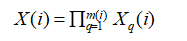
and the set Xq (i) with elements хq (i) is called the channels. In this case, the output of operator (i) represents the input of operator (j), if there is such a q(j) that хq (j) =
y(i). In this case, operators (i) and (j), are called additive. Let the given operators be connected according to some scheme and as such they are called a network of operators. If the number k(i) of outputs of other operators, which are the inputs of operator (i) is less than n(i), then the remaining free channels represent the channels of the network, while the elements of the set. (Zhang et al., 2024)
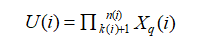
represent the inputs of the network, free channels have numbers, from k(i)+1 to n(i).
The described network can be considered as some operator F: x®y, where X=FU(i), and the output can be formed by the outputs of the network operators. The operator F, in relation to the network operators, is called the next higher level operator, and the network of such operators represents the next higher level network (Elamy et al., 2024).
If the network typology and description of each operator are given, then the description of the entire network is given, that is, the description of the operator of the next higher level is given. Such a description can be complex, so the task of determining a simplified description of the operator of the next higher level may arise, based on studying the network. The meaning of such an approach is that the problem of modeling an accounting information system is reduced to determining the network typology and describing the elementary network operators (Savić et al., 2024).
Let us consider in more detail the type of model that will be the subject of analysis further, models of dynamic systems, in the general case - controllable (Milenković et al., 2023). If we have a real system - an economic system or a complex economic system, which consists of subsystems of different nature, and whose state can be characterized at any moment by the number x, or a series of numbers (indicators), i.e. a vector
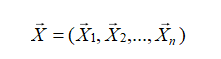
or in general an element of some set Хo, which we call the state space. A change in state х over time is called a process. If this change can be controlled, the process is called controllable (Vuleta et al., 2013).
Let the state be considered at certain moments to, t1, …, tk, tk+1 > ti. We call the moment to and the state at that moment х(to) the initial. The moments t1, t2, ... represent steps, and the corresponding states х(t1), х(t2),..., are states at the first, second step, etc. Control processes can, as a rule, be described by indicating the regularities of the transition from the previous state х(ti) to the next state х(ti+1) at each step depending on the control influence, which characterizes some vector (Ning et al., 2023)

(set of control parameters), or, in the general case, an element of the set uo, which is called the control set.
In addition to control, this transition can also be influenced by other factors that cannot be controlled and strictly encompassed. They are also characterized by a state and control by some vector, or an element of a set of another nature, which is often called a disturbance.
The mathematical model of the control process is, as a rule, an equation that connects the next state with the previous state, control and disturbance:

In the case when the excluded factors are so insignificant that they can be ignored in the mathematical model, the element v is not included in the equation, and the equation describes the process with complete information. In this case, the process is completely determined if the initial state x(to) and the control and disturbance at each step are given (Gojkov, 2024). This change is usually called the realization of the control process at a given disturbance.
Models of complex economic systems are compiled in the form of block diagrams. These block diagrams consist of a series of elementary block diagrams, interconnected by arrows, which indicate that the inputs and outputs are vector functions u,y. The impact of the environment on the system is characterized by some parameters, or indicators, which are called input parameters. The inputs u(t) of the system determine the components of its state.
The influence of the system on other phenomena and factors that are also some separate independent systems is represented by the output y(t), which is determined by the concepts of input-state and output. Therefore, the system model is determined in the following way: S=(U, Y, E), where U is the input space, i.e. the set of all inputs, such that each input corresponds to an output, i.e. the pair (u,y)ϵE; Y is the output space, i.e. the set of all outputs, such that each output is conditioned by the input, where (u,y)ϵE; Е is the set of input-output pairs, such that (u,y)ϵE(Stankov & Roganović, 2022).
The set E represents the characteristic of the system S, or the degree of decision- making, on the basis of which the optimal arrangement of vertical and horizontal connections in the system is determined. In other words, the set E determines the relationship that determines the dependence of the input on the output, i.e. (Milenković, 2023).
E Ì UY
In some cases, the output of the system is, at the same time, its state, i.e. y(t)=x(t). On the other hand, the input of the system represents the influence of the environment on the system. Information inputs and outputs are of particular importance, because management is achieved using information processes, i.e. the use of cause-and-effect relationships.
The nature of subsystems and elements of complex systems is diverse. The interactions of subsystems at one level and between different levels of the hierarchy are also diverse.
In complex economic systems, all interdependencies do not have the character of connections of the type of system state equations. A large group of interactions has the character of behavioral hypotheses and is provided through an operator that describes optimization procedures, or they cannot be formalized at all. In addition, very often the mechanisms of the connection are not known and are formalized as a "black box". However, not simply as input-output, but that the output is a function of the input and state of the system.
Conclusion
This deepens knowledge in the field of accounting and creates a basis for further work in this not at all simple, but very interesting and important area of economics and management as a science. In this regard, accounting is presented as an information system and the basic tools and mechanisms used in accounting are presented. A very important place is occupied by the presentation of the connections between data and information, which are established through the accounting and information system.
The presentation of accounting as an information system is carried out through several interconnected units, which together form a single model, on scientifically acceptable grounds. The accounting and information system, in this model, is presented as a closed system of each business entity, including all necessary factors. The development of accounting as a system, within the framework of socio-economic changes, throughout history points to an increasingly shorter periodization of changes in the relationships between factors, while retaining its basic model of simple bookkeeping throughout its entire period of development. As such, the accounting and information system leaves room for upgrading the existing system with a new model of account linkage. The connection between basic and derived accounting instruments, in any period of development, is constantly strong, due to the principles on which accounting as an information system is based. It is important to emphasize that one of the qualitative characteristics can also be considered the systematization of previous knowledge in this area.
References
2.Ali, S., Sadoun, A.M., Fathy, A. & Abdallah, A.W. (2023). Numerical modeling of magnetohydrodynamic buoyancy-driven convection for enhanced energy applications, Case Stud. Therm. Eng., 52, 103823.
3.Barile, D., Pontrelli, V., & Posa, M. (2023). Kako mogu da vas finansiram? - međukulturalna analiza difuzije nagrada zasnovana na aktivnostima grupnog finansiranja. Društveni horizonti, 3(6), 21-48. https://doi.org/10.5937/ drushor2306021B
4.Dašić, B., Župljanić, M. & Pušonja, B. (2023). Uloga regulatornog okvira na prilive stranih direktnih investicija. Akcionarstvo, 29(1), 95-112
5.Elamy, M.I., Abd Elaziz, M., Al-Betar, M.A., Fathy, A. & Elmahdy, M. (2024). Enhanced random vector functional link based on artificial protozoa optimizer to predict wear characteristics of Cu-ZrO2 nanocomposites, Results Eng., 24, 103007.
6.Gojkov, D. (2024). Karakteristike objekata prava i državine. Revija prava javnog sektora, 4(1), 23-34.
7.Gojković, B., Obradović, Lj. & Mihajlović, M. (2023). Uticaj makroekonomskih faktora na javni dug Republke Srbije u posttranzicionom periodu. Akcionarstvo, 29(1), 217-238.
8.Janković, G., & Golubović, M. (2024). Analiza uticaja koncepta cirkularne ekonomije na privredni razvoj. Održivi razvoj, 6(1), 7-31. https://doi.org/ 10.5937/OdrRaz2401007J
9.Majstorović, A. & Obrić B. (2023). Principi za poboljšanje dosadašnjeg stanja interne budžetske revizije. Finansijski savetnik, 28(1), 51-68
10.Milanović, N. (2023). Menadžment finansijske održivosti neprofitnih organizacija. Održivi razvoj, 5(1), 7-17. https://doi.org/10.5937/OdrRaz 2301007M
11.Milenković, N. (2023). Mogućnosti koriscenja aplikacija sa otvorenom licencom u razvoju programa. ITB-informatika, tehnika, biznis, 1(1), 33-48
12.Milenković, N., Radosavljević, M., & Vladisavljević, V. (2023). Korišćenje aplikacija sa otvorenom licencom u razvoju programa poslovnog preduzeća. Održivi razvoj, 5(2), 35-49. https://doi.org/10.5937/OdrRaz 2302035M
13.Najjar, I.M.R., Sadoun, A.M., Ibrahim, A., Ahmadian, H. & Fathy, A. (2023a). A modified artificial neural network to predict the tribological properties of Al-SiC nanocomposites fabricated by accumulative roll bonding process, J. Compos. Mater., 57 (21), 3433–3445.
14.Najjar, I.M.R., Sadoun, A.M., Abd Elaziz, M., Ahmadian, H., Fathy, A. & Kabeel, A.M. (2023). Prediction of the tensile properties of ultrafine grained Al–SiC nanocomposites using machine learning, J. Mater. Res. Technol., 24, 7666–7682.
15.Ning, F., Shi, Y., Tong, X., Cai, M. & Xu, W. (2023). Manufacturing cost estimation based on similarity, Int. J. Comput. Integr. Manuf., 36 (8), 1238– 1253.
16.Paspalj, M., Paspalj, D., & Milojević, I. (2024). Održivost savremenih ekonomskih sistema. Održivi razvoj, 6(1), 33. https://doi.org/10.5937/ OdrRaz2401033P
17.Savić, A, Mihajlović, M.,. & Ristić, D. (2024). Menadžerski aspekti egzistiranja preduzeća na savremenom tržištu, Ekonomski izazovi, 13 (26), 15-24. https://doi.org/10.5937/EkoIzazov2426015S
18.Schroeder, R.G., Clark, M.W. & Cathey J.M. (2022). Financial Accounting Theory and Analysis: Text And Cases, John Wiley & Sons.
19.Stankov, B. & Roganović, M. (2022). Pružanje podrške i podsticanje razvoja malih i srednjih preduzeća u Evropskoj uniji. Akcionarstvo, 28(1), 21-44.
20.Škarić Jovanović K. 2010. Finansijsko računovodstvo, Ekonomski fakultet, Beograd.
21.Vladisavljević, V., Mičić, S & Zupur, M. (2023). Analiza kao osnov za donošenje poslovnih odluka. Finansijski savetnik, 28(1), 7-35.
22.Vuleta J, Andzić R., Andzić S., Vukasović D., Miletić A., 2013. Selection of the best conctractor for realization of each project activity using multi-criteria analysis, Metalurgia international, 18, 10-2013, 69-71.
23.Zhang, X., Li, Y., Xiong, Z., Liu, Y., Wang, S. & Hou, D. (2024). A resource- based dynamic pricing and forced forwarding incentive algorithm in socially aware networking, Electronics, 13 (15), 3044.
Published in
Vol. 10 No. 3 (2024)
Keywords
🛡️ Licence and usage rights
This work is published under the Creative Commons Attribution 4.0 International (CC BY 4.0).
Authors retain copyright over their work.
Use, distribution, and adaptation of the work, including commercial use, is permitted with clear attribution to the original author and source.
Interested in Similar Research?
Browse All Articles and Journals